
“VUT alumnus Rethabile Khabane shares his powerful journey of resilience, disability inclusion, and advocating for accessible learning and equal opportunities.”
02 December 2025 | Story by: Nontobeko Moimane | Picture by: Supplied
4 minutes read time.
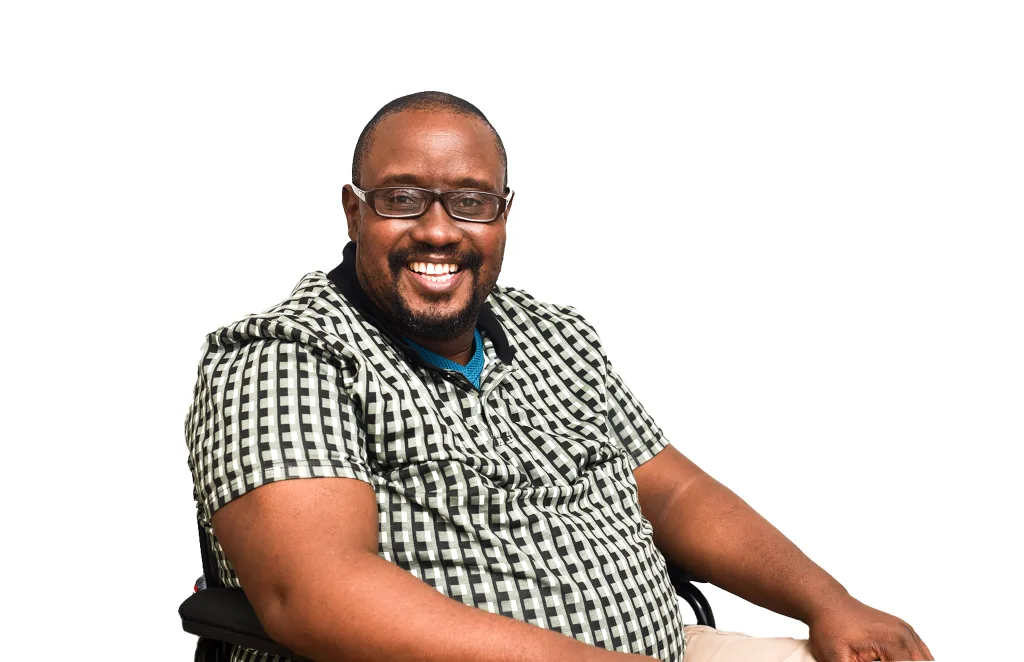
As Vaal University of Technology (VUT) marks Disability Awareness Month, observed nationally from 3 November to 3 December, the story of alumnus Mr Rethabile Edwin Khabane resonates powerfully with this year’s theme, which calls on society to look beyond the label and recognise the person. His journey embodies resilience, dignity and an unwavering belief in equitable access and inclusive learning environments.
Mr Khabane describes his journey as one defined by challenges that refined him into the resilient man he is today. Born with a paraplegic condition and using a wheelchair for mobility, he navigated his academic path with courage, determination, and a deep desire to defy limitations, both societal and structural.
A Journey Shaped by Courage and Change
Mr Khabane initially pursued a Diploma in Analytical Chemistry, driven by the influence of his father, who worked as a pharmacy assistant. However, as he grew into his own aspirations, he shifted his academic focus to Operations Management. “My father inspired chemistry, but Operations Management felt like my own calling,” he recalls.
His university years taught him more than academic content; they strengthened his resilience and taught him the value of teamwork. “Challenges helped me grow. They taught me how to collaborate with colleagues and understand people better,” he says.
Living With a Disability: Misconceptions and Realities
Mr Khabane advocates for correcting everyday misconceptions about disability. “A person using a wheelchair does not always need someone to push them, independence is part of who we are,” he explains.
He highlights the importance of accessibility, praising the consistent support from VUT’s security officers and the reliability of campus lifts. However, he also calls for further improvements, such as upgraded accessibility infrastructure and disability-friendly spaces outside student residences like the Desmond Great Tutu Hall.
Support, Community and Academic Success
When reflecting on his academic journey, Mr Khabane credits fellow students, laboratory staff, and lecturers for the support they offered, especially in laboratory environments that were not always built with wheelchair users in mind. “Finishing my studies was about wiping my parents’ tears and proving to myself that having nothing can be a powerful motivation,” he says. His determination stemmed from a deep desire to honour the people who believed in him.
Barriers Beyond Graduation
Despite his qualifications, Rethabile notes that employment remains one of the most significant barriers for people living with disabilities. “There are still things I cannot do because I’m in a wheelchair, not because of my ability, but because of leadership perceptions,” he notes. He calls for equitable access to employment, meaningful inclusion in development pathways such as middle management training and Project Management, and a stronger presence of people with disabilities across the workplace.
A Voice for Education, Respect and Equality
Mr Khabane is passionate about changing how society views disability. He believes awareness must be lived daily, not only observed once a year. Educate others. Use respectful language. Promote accessibility. Challenge discrimination.
To students living with disabilities, he offers a powerful message: “You are here because you deserve to be here. Live your life to the fullest. Show up. Participate. Let challenges be your stepping stones, not your stumbling blocks.”
Hopes for the Future
When asked about his hopes for people with disabilities in South Africa, Mr Khabane speaks of freedom, access, and representation. “The life you want is beyond your fear. One step at a time, everything will be well,” he affirms.
He dreams of a world where infrastructure supports independence, where people with disabilities are hired across universities, and where they are included in decision-making processes, especially on matters affecting them. “Nothing for us without us,” he emphasises.
Above all, he calls on society to let people with disabilities pursue their dreams without limitation: “Allow them to be themselves. Give them room to grow, contribute, and shine.”
As Disability Awareness Month draws to a close, anchored by this year’s call to look beyond the label, Mr Khabane’s story reminds us that visibility must lead to action. His journey is a quiet but powerful insistence that inclusion is not charity, but justice. It is a daily commitment to creating spaces where every person is recognised, supported, and empowered to rise on their own terms.