
“The Vaal University of Technology (VUT) launched the SASUF Student Network to connect students with international research, innovation, leadership, and global collaboration opportunities.”
“12 May 2026 | Story by: Nontobeko Moimane| Picture: Keitumetsi Mokgope“
4 minutes read time.
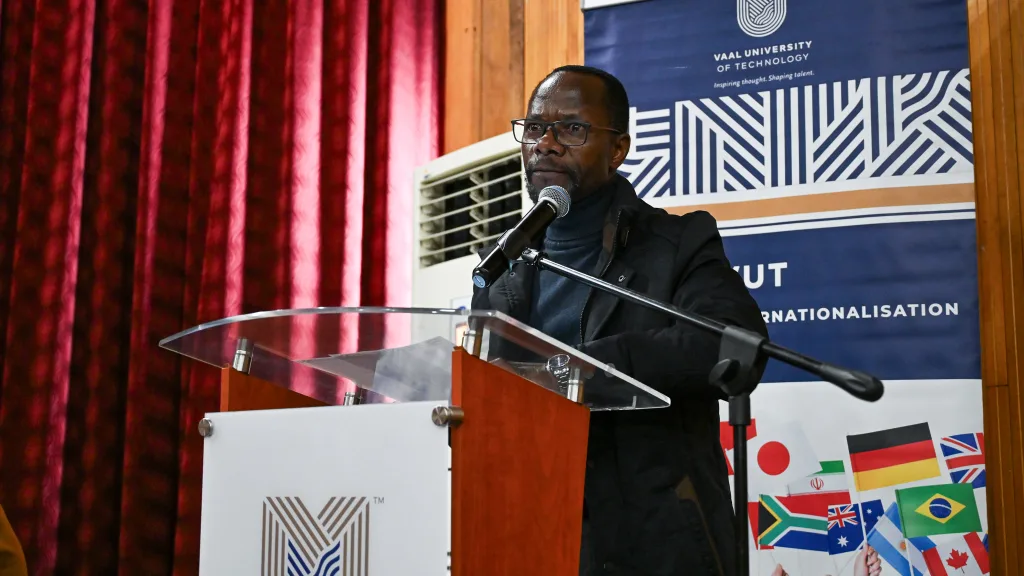
The spirit of global collaboration, student empowerment and academic transformation filled the halls of the Vaal University of Technology (VUT) as students, academics and international partners gathered for the launch of the South Africa Sweden University Forum (SASUF) Student Network initiative. Held at the Desmond Tutu Great Hall, Vanderbijlpark Campus, on 08 May 2026, the event marked the beginning of a new chapter aimed at connecting VUT students to international research, innovation, leadership and cross cultural collaboration opportunities.
More than simply introducing a programme, the launch reflected a growing vision of higher education that extends beyond borders, one where students are not only recipients of knowledge, but active participants in shaping global conversations and solutions.
Welcoming attendees and sharing reflections from student leadership, VUT Student Representative Council (SRC) Deputy President, Mr Nkululeko Ndaba, described the initiative as a reminder that education should never be limited by geography or circumstance.
“As students, we appreciate this because some of us have only seen Sweden through Netflix,” he joked, drawing laughter from the audience before adding: “But today, through SASUF, we are officially being introduced to a programme that opens doors for students to engage in international research, innovation and leadership.”
Ndaba encouraged students not to disqualify themselves from international opportunities because of fear, background or self-doubt.
“These opportunities are not only for people who speak perfect English or have polished LinkedIn profiles,” he said. “They are for hardworking students willing to learn, grow and challenge themselves.”
He further reminded students that education must ultimately serve society and future generations.
“Education is about transforming communities, building nations and creating solutions for generations to come,” he added.
The session also featured insights from SASUF Student Network National Coordinator, Mr Andile Mthembu, who unpacked the structure and broader vision of the SASUF Plus programme. He explained that SASUF has evolved into a collaborative ecosystem bringing together academia, industry, society and students across Africa.
Central to the programme is the “Students as Game Changers” work package, an initiative specifically designed to create meaningful opportunities for postgraduate students and emerging researchers.
“This platform exists because students realised they were central to research projects but were not always benefiting from those opportunities,” Mr Mthembu explained. “SASUF Student Network was created to ensure students are not spectators in research collaboration, but active participants and leaders.”
He further highlighted that the network spans 37 partnering universities and creates opportunities for networking, collaborative research, student led projects and international exposure.
The event also featured powerful testimonies from student leaders whose lives and academic journeys have already been transformed through the network.
Ms Philangezwi Mbatha, representing the University of the Witwatersrand (Wits), reflected on how the programme broadened her understanding of leadership and impact beyond traditional career paths.
“I realised that impactful change is not only made in Parliament or political offices,” she said. “Academics and researchers are also shaping policy and transforming society through knowledge production.”
Drawing from her own experiences, Mbatha encouraged students to maximise every opportunity available to them during their university journey.
“As someone who comes from a disadvantaged background, SASUF taught me that education can take you far,” she shared. “Do not leave university with only a qualification. Get involved, expose yourself and place yourself in rooms where people challenge and inspire you.”
Representing the Tshwane University of Technology (TUT) SASUF Student Network, Ms Nokwanda Khumalo congratulated VUT on launching the initiative and reflected on the impact the network has already made at TUT.
“This is not just another student structure,” she said. “It is the beginning of leadership, collaboration, innovation and empowerment.”
Khumalo also encouraged VUT students to remain visible and actively engaged through regular networking sessions, student activities and collaborative platforms that keep students connected to research and innovation opportunities.
“Support the Student Network and get involved,” she urged. “The more involved you are, the more opportunities you create for yourself and others.”
The launch reflected VUT’s growing commitment to internationalisation, research collaboration and student development. Through the SASUF Student Network, students will gain access to platforms that encourage interdisciplinary learning, global academic engagement, innovation and collaborative research partnerships.
As conversations continued long after the formal programme had concluded, one message remained unmistakably clear: the future of higher education will belong to institutions that empower students not only to learn, but to collaborate, innovate and contribute meaningfully to solving global challenges