
“VUT’s Department of Accountancy hosted a SARS tax workshop to help staff understand filing season, retirement planning, additional income, tax penalties and tax compliance”
02 July 2026 | Story by: Tayron Mhlongo | Picture: Siphephelo Dlamini
3 minutes read time.
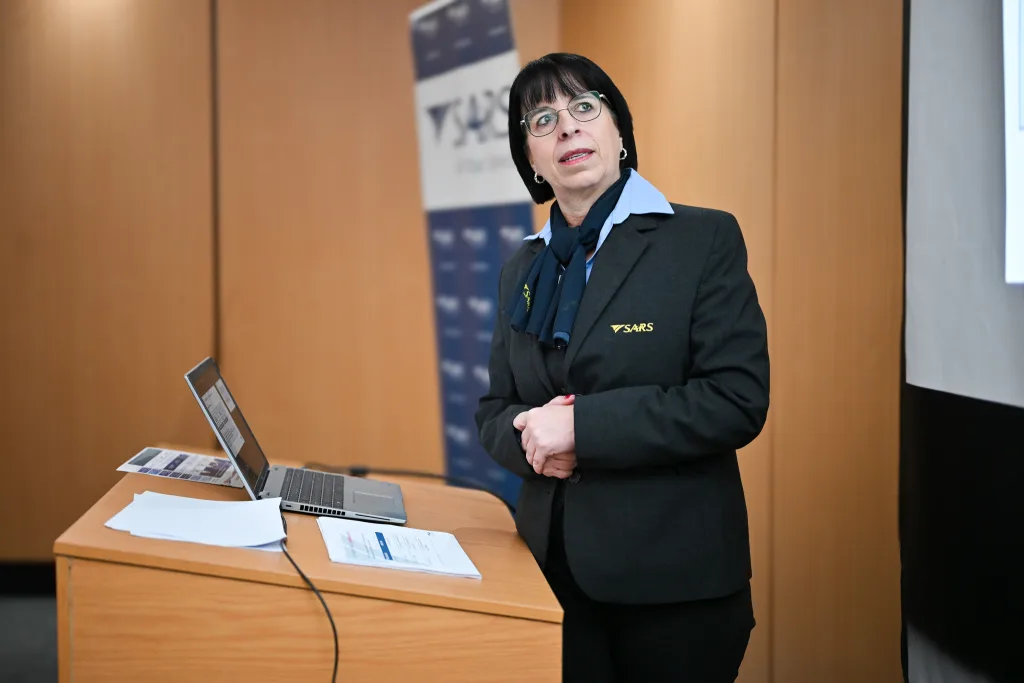
The Department of Accountancy at Vaal University of Technology (VUT) hosted a focused tax workshop with the South African Revenue Service (SARS) for staff from across the institution on 29 June 2026. The session provided practical guidance ahead of the income tax filing season, explained recent regulatory changes, and addressed staff questions about day-to-day tax issues affecting VUT employees.
SARS representatives covered four core topics: Retirement Planning, Additional Income, Administrative Penalties, and Tax Fraud. Each topic was explained with an emphasis on what staff must do to remain compliant and avoid costly penalties. Ms Hetty Lawrence from SARS used examples relevant to university employees, such as medical scheme fees, tax credits, travel allowances and part time income, to show how the rules apply in practice.
Ms Lawrence highlighted the recently introduced two-pot retirement system and outlined its benefits and pitfalls. She stressed that payouts or withdrawals from retirement funds are simpler and less risky when an individual’s tax affairs are up to date. In her words, the common resistance to the two-pot system often stems from outstanding tax returns.
“To ensure a smooth tax directive and payment process, employees should first submit any outstanding returns, so SARS records show compliance,” she said.
Dr Rachel Khumalo from the Department of Accountancy explained that the workshop was strategically scheduled ahead of the filing season, which opens on 1 July, with auto assessments commencing on 12 July. The session aimed to equip staff with practical guidance on when and how to file, the documents required, how the two-pot retirement system affects taxable income, and how SARS treats travel allowances and bursary fringe benefits. She noted that this was particularly relevant to VUT because the University administers bursaries that may create fringe benefit tax implications for some employees.
During the question-and-answer session, the discussion turned to whether travel allowances provide meaningful tax benefits. One attendee, Professor Gauta Maseko, shared his personal experience while lecturing at the University of Johannesburg (UJ).
“SARS looked only at my income and ignored the travel expenses I incurred. In practice, I ended up paying tax on my travel allowance and later having to reconcile amounts with SARS, so there was no real benefit to me,” he said.
Responding to the question, Ms Lawrence explained that the outcome often depends on how an employee’s remuneration package is structured. She noted that where a travel allowance is not specifically included as part of a salary package, employees are generally not entitled to claim travel expenses separately.
The workshop provided VUT staff with timely, practical guidance ahead of the July filing season while clarifying how recent tax changes, particularly the two-pot retirement system, affect their personal tax obligations. By understanding the filing requirements and maintaining tax compliance, employees will be better positioned to avoid administrative penalties and ensure smoother interactions with SARS.