
“VUT’s Majita Monday Clinic brings HIV prevention, health screening, mental health support and counselling closer to male students.”
22 October 2026 | Story by: Sadiki Siphiwe | Picture: Sifiso Nomzaza
3 minutes read time.
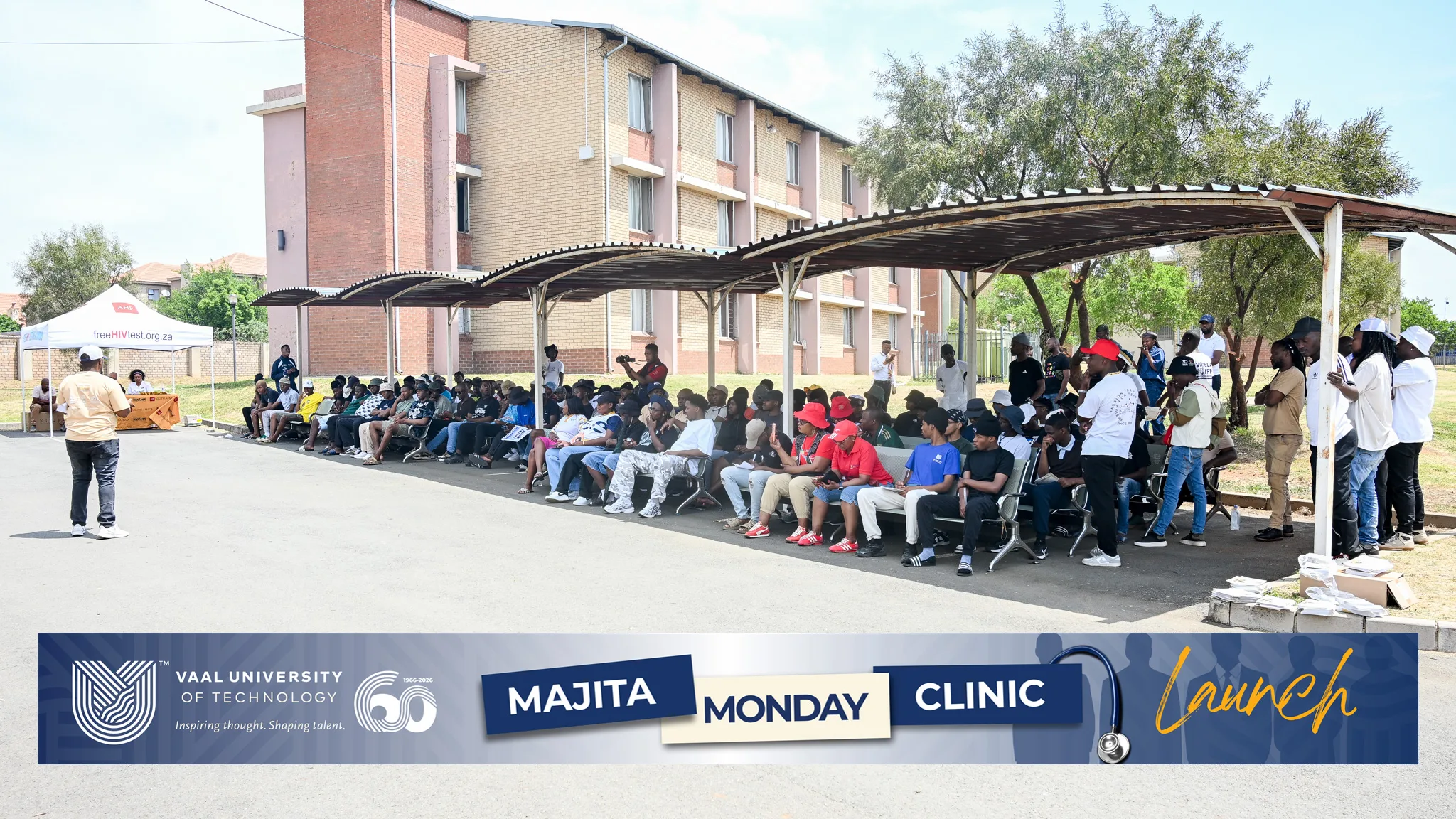
Seeking help should never be a source of shame. This message shaped the launch of the Vaal University of Technology (VUT) Majita Monday Clinic on 14 October 2026, an initiative bringing healthcare and emotional support closer to male students.
Located at the former residence placement offices at the Main Residence, next to Nkandla Residence, the clinic provides a supportive, non-judgemental space where students can take charge of their physical, mental and sexual health.
The initiative, launched by VUT’s Department of Health, addresses barriers that often discourage young men from seeking assistance, including stigma, fear of judgement and expectations that men should handle their problems alone.
Directing the launch programme, Mr Vincent Mdluli, HIV Assistant Coordinator at VUT, emphasised the importance of reaching students before their challenges become overwhelming.
“We are losing young men who are struggling in silence. Many are facing challenges they find difficult to share with their friends, families or even professionals. Through Majita Monday, we want every young man to know that he is not alone, that someone is willing to listen and that help is available,” he said.
Mr Mdluli raised concern about six reported cases of attempted suicide involving male students at the university. He highlighted the need for early intervention, open conversations and accessible mental health support.
The clinic also aims to contribute towards a generation free from human immunodeficiency virus (HIV) through testing, prevention, treatment and education. Mr Mdluli encouraged students to know their status and seek reliable information to make informed decisions about their health.
Operating every Monday from 19 October 2026, the clinic offers tuberculosis screening, blood pressure and diabetes screening, acute care and services for sexually transmitted infections. Its HIV services include testing, antiretroviral therapy initiation, post-exposure prophylaxis, pre-exposure prophylaxis and condom distribution. Mental health screening and social worker counselling are also available.
The launch featured Mr Joseph Motloung from the AIDS Healthcare Foundation (AHF), whose personal experience highlighted the importance of acceptance, treatment and challenging HIV-related stigma.
Known through his advocacy as “Positive Joseph”, Mr Motloung shared how his diagnosis on 10 June 1994 initially left him isolated and fearful. He later accepted his status and publicly disclosed it to his community in December that year.
Despite encountering prejudice and hurtful assumptions about his future, he began sharing information about HIV at schools in 1995. He started antiretroviral treatment in 2007 and continued building his advocacy through community education and support groups, eventually joining AHF.
His story reminded students that an HIV diagnosis does not determine a person’s worth or close the door to a fulfilling future. He encouraged young people to prioritise their education, learn about HIV and make informed choices about their sexual health.
Mr Morgan Pillay, representing Parliament’s public participation and education structures, also addressed students. He highlighted opportunities for young people to engage in public affairs, raise community concerns and contribute to decision-making.
His contribution reinforced the value of seeking information and using available channels to address issues affecting students and their communities.
Mr Livhuwani Given Thavhana, Housing and Catering Officer of the Student Representative Council (SRC), attended the launch, highlighting the connection between residence life and student well-being.
Through peer education and accessible services, Majita Monday seeks to encourage male students to speak openly, support one another and seek assistance early. Bringing healthcare closer to residences gives students a practical point of access when health concerns or personal difficulties affect their university experience.
Male students are encouraged to visit the clinic every Monday for screening, treatment, prevention services or counselling. Those unsure about the support they need can approach the clinic for guidance.
The message is clear: looking after your health includes knowing when to ask for help.