
“VUT hosted the Department of Higher Education and Training on 17 November 2026 to assess infrastructure project implementation, student accommodation and future development priorities.”
25 November 2026 | Story by: Nontobeko Moimane| Picture: Peter Masela
4 minutes read time.
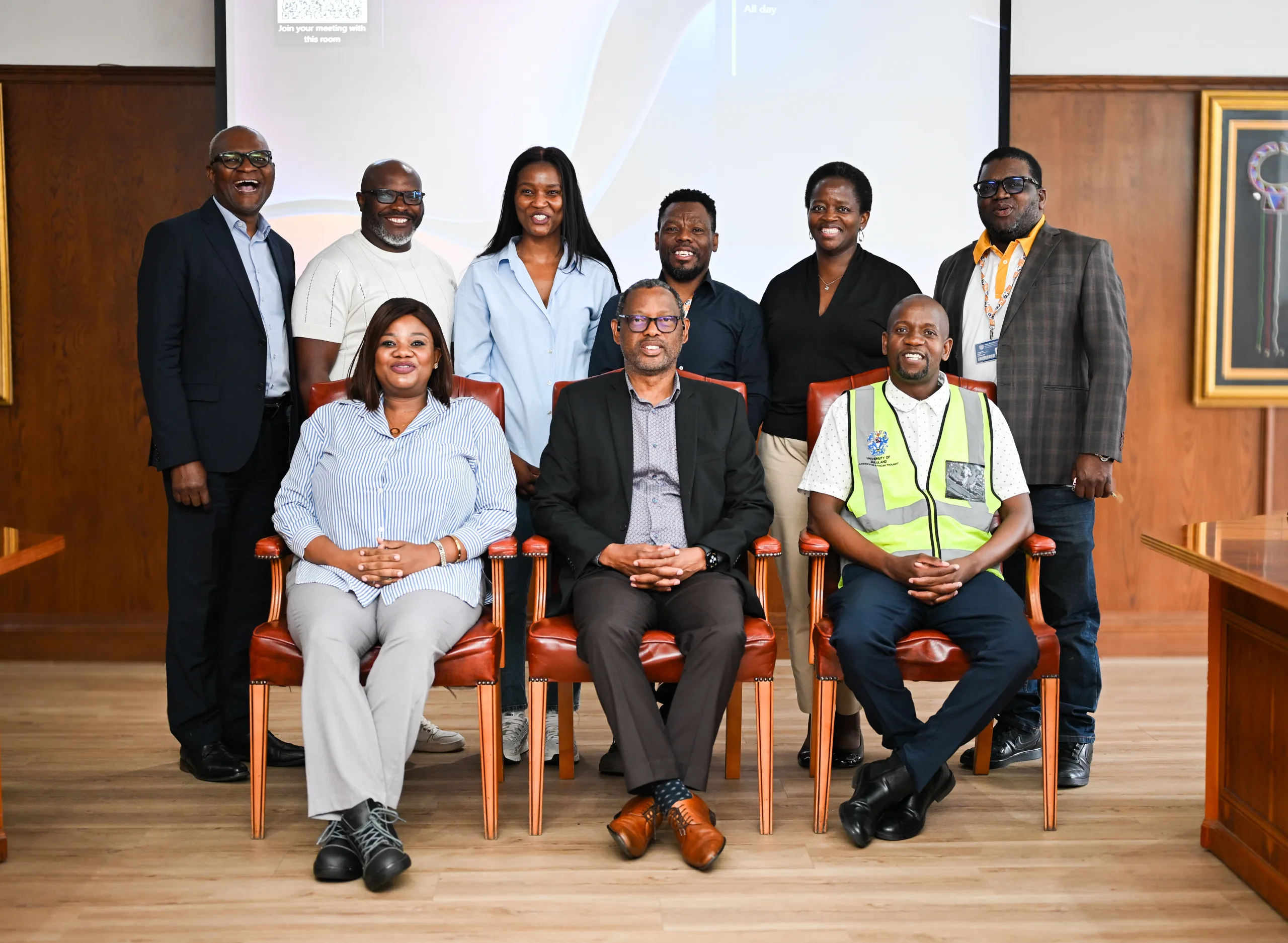
Strengthening infrastructure delivery, accelerating project implementation and ensuring accountability in the management of public resources were central to an engagement between the Vaal University of Technology (VUT) and the Department of Higher Education and Training (DHET) on 17 November 2026 at the University’s Council Chambers.
Led by Mr Donald Kubayi and Ms Ratanang Banda, Deputy Directors for Infrastructure Support at DHET, the delegation visited VUT to assess progress on projects funded through the Infrastructure Efficiency Grant (IEG), planned infrastructure developments and the Student Housing Infrastructure Project (SHIP).
The engagement provided an opportunity for the University to account for progress, address implementation challenges and outline interventions aimed at strengthening infrastructure delivery in support of its academic mandate and student experience.
Welcoming the delegation, Professor Khehla Ndlovu, VUT Vice-Chancellor and Principal, emphasised the importance of accountability, collaboration and strategic alignment in ensuring that infrastructure investments respond to the University’s long-term institutional priorities and the needs of its students and staff.
The engagement featured presentations by Mr Rodney Matentshi, VUT Executive Director for Operations and Logistics, and Ms Sebenzile Dlamini, Director of Infrastructure and Facilities. The presentations provided a comprehensive overview of the University’s infrastructure portfolio, covering project implementation, expenditure, procurement processes, contractor performance and anticipated completion timelines.
Mr Matentshi outlined projects at various stages of implementation, including completed works, ongoing construction, projects undergoing procurement and those requiring further intervention. These included academic infrastructure, student residences, campus facilities, energy security, maintenance and refurbishment.
While acknowledging progress, the University also highlighted challenges associated with contractor performance, procurement delays and cost escalations that have affected the implementation of some projects.
“We note the importance of strengthening project management and monitoring mechanisms to ensure that projects are delivered within approved budgets, specifications and timelines,” said Mr Matentshi.
Energy security emerged as another strategic priority, with discussions focusing on the installation and commissioning of generators and interventions aimed at strengthening the University’s resilience against electricity supply disruptions. Campus security and universal accessibility also featured prominently, reflecting the importance of creating a safe, inclusive and functional environment for students, staff and visitors.
Student accommodation formed a significant part of the engagement, particularly regarding SHIP and the University’s broader residence development programme. Discussions focused on expanding accommodation capacity, improving existing residence facilities and addressing infrastructure backlogs.
Recognising the relationship between suitable student accommodation and academic success, the University also emphasised the importance of effective communication and consultation with students, particularly where construction and refurbishment activities may affect their living arrangements.
Mr Kubayi welcomed the presentations, emphasising the need for transparency, effective oversight and accountability in ensuring that infrastructure funding achieves its intended outcomes.
“There’s a need for the University to identify outstanding challenges, improve project implementation processes and maintain effective oversight of contractors and service providers,” said Mr Kubayi.
Ms Banda also engaged institutional representatives on infrastructure priorities, project planning and the support required to advance implementation, enabling both parties to identify areas requiring further intervention and collaboration.
Mr Scelo Mahlalela, VUT Deputy Vice-Chancellor for Resources and Operations, underscored the importance of approaching infrastructure development strategically, supported by responsible resource allocation, sound governance and effective institutional coordination.
He emphasised that infrastructure projects should not be viewed merely as construction activities, but as strategic investments that must contribute to the University’s long-term sustainability, operational efficiency and academic environment.
“There’s a need for stronger coordination between institutional departments, improved project monitoring and the timely resolution of implementation challenges,” said Mr Mahlalela.
The engagement concluded with a campus site visit, during which the DHET delegation inspected selected infrastructure projects, assessed progress and engaged University representatives on outstanding works and areas requiring attention. The visit provided an opportunity to contextualise the presentations against the practical realities of project implementation.
The engagement reaffirmed the importance of continued collaboration between VUT and DHET in strengthening infrastructure governance, addressing implementation challenges and ensuring the responsible management of public resources.
As VUT advances its Strategy 2033+ ambitions, infrastructure development remains a critical enabler of institutional transformation, academic excellence and an enhanced student experience. Ultimately, the success of these investments will be measured not merely by the completion of construction projects, but by their lasting contribution to the quality of teaching, learning, research and campus life.