
“VUT Fine Arts lecturer Ms Nkululeko Khumalo reflects on FALF 2026 and its focus on women, innovation, commercialisation and African heritage.”
19 August 2026 | Story by: Qhawekazi Memani | Picture: Supplied
4 minutes read time.
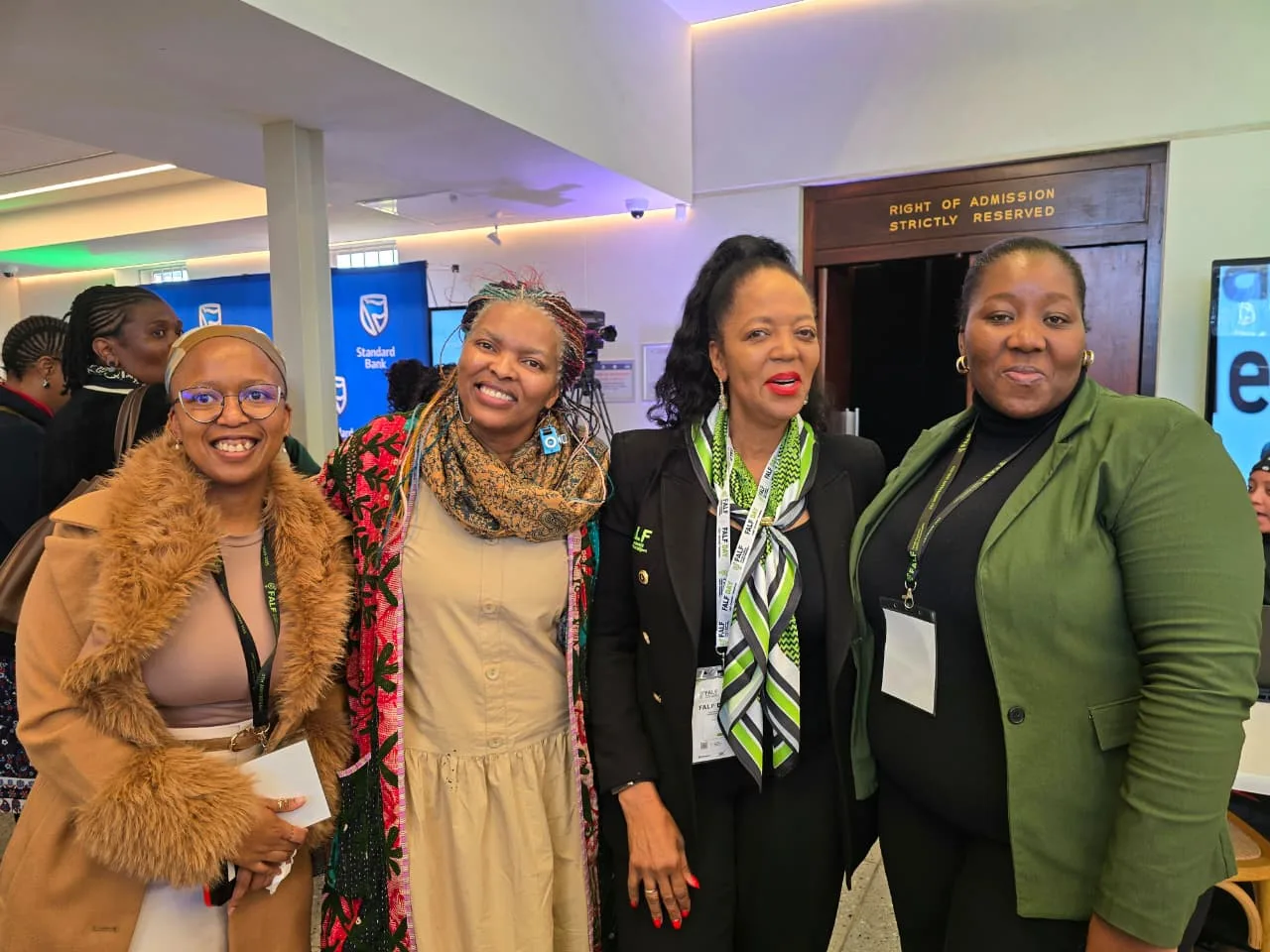
When women gather to exchange ideas, share experiences and consider how knowledge can change society, the conversation reaches far beyond the walls of academia.
This was the spirit of the Female Academic Leaders Fellowship (FALF) 2026 event, held on 6 August 2026 at the Wits Anglo American Digital Dome. Hosted by the University of the Witwatersrand (Wits University) through FALF, in collaboration with Standard Bank, the event brought together conversations on women in academia, research, innovation, leadership and commercialisation.
Representing the Vaal University of Technology (VUT) were Ms Nkululeko Khumalo, a lecturer in the Department of Fine Arts and an independent curator; Professor Agnes Pholosi, Associate Professor in the Department of Natural Sciences; and postgraduate students Ms Dikeledi Ratheko and Ms Lakheni Tshutshane.
For Prof Pholosi and Ms Khumalo, the event was more than an academic gathering. It offered an opportunity to reflect on how ideas move from lecture halls, studios and laboratories into the world, where they can improve lives and strengthen communities.
The keynote address by Tom Hockaday, an author and specialist in university technology transfer and commercialisation, explored the journey of turning research and ideas into practical solutions. One of the messages that stayed with Prof Pholosi and Ms Khumalo was the importance of understanding intellectual property (IP) and protecting original ideas, particularly as more women establish themselves in research and innovation.
She also reflected on the importance of not walking that journey alone.
“The journey to success cannot be achieved without support from knowledgeable professionals and collaboration among researchers, communities, industry partners and funders,” she said.
For Ms Khumalo, commercialisation should not be reduced to making money from research. At its heart, it is about taking discoveries, technologies, products and services beyond academic spaces and using them to respond to the challenges people face every day.
When approached with purpose, she noted, commercialisation can create social value, stimulate economic growth and improve the quality of life in communities.
Among the guest speakers who left a lasting impression on her was Laduma Ngxokolo, founder and Chief Creative Director of MAXHOSA AFRICA. His story showed how personal history, family knowledge and cultural heritage can become the foundation of a globally recognised brand.
Ngxokolo learnt to knit from his late mother. What began as a skill passed from mother to son became an important part of his creative journey. His fascination with a knitting machine later developed into academic and creative work that explored how Xhosa aesthetics, beadwork, colours, patterns and symbolism could find new life in contemporary knitwear.
For Ms Khumalo, his story carried a particularly powerful message: heritage is not something that belongs only to the past.
“African heritage does not have to be preserved only in museums or historical archives. It can be lived, redesigned and transformed into a contemporary global language,” she said.
Through MAXHOSA AFRICA, Ngxokolo has shown that African creativity can take its place in the global luxury market without surrendering the identity, history and cultural meaning from which it was born.
His journey also challenged narrow ideas about where knowledge comes from. Knowledge does not live only in universities, research papers and formal qualifications. It is also carried in families, communities, cultural traditions and lived experiences. Sometimes, it begins quietly, with a mother teaching her child a skill.
That skill can grow into creative practice, academic research, entrepreneurship and, ultimately, a global enterprise.
The event also encouraged women to claim a more active place within innovation ecosystems. Speakers highlighted resilience, collaboration, access to funding and strong professional networks as essential to moving ideas from research into practice.
For Prof Pholosi and Ms Khumalo, FALF 2026 revealed what becomes possible when academic knowledge meets creativity, heritage and opportunity. It was a reminder that women’s ideas deserve not only to be heard, but also to be protected, supported and given the space to grow into solutions that create lasting social and economic impact.