
“VUT and ArcelorMittal South Africa explore collaboration in engineering training, curriculum development, workplace learning and postgraduate research.”
07 October 2026 | Story by: Sadiki Siphiwe | Picture: Keitumetse Mokgope
2 minutes read time.
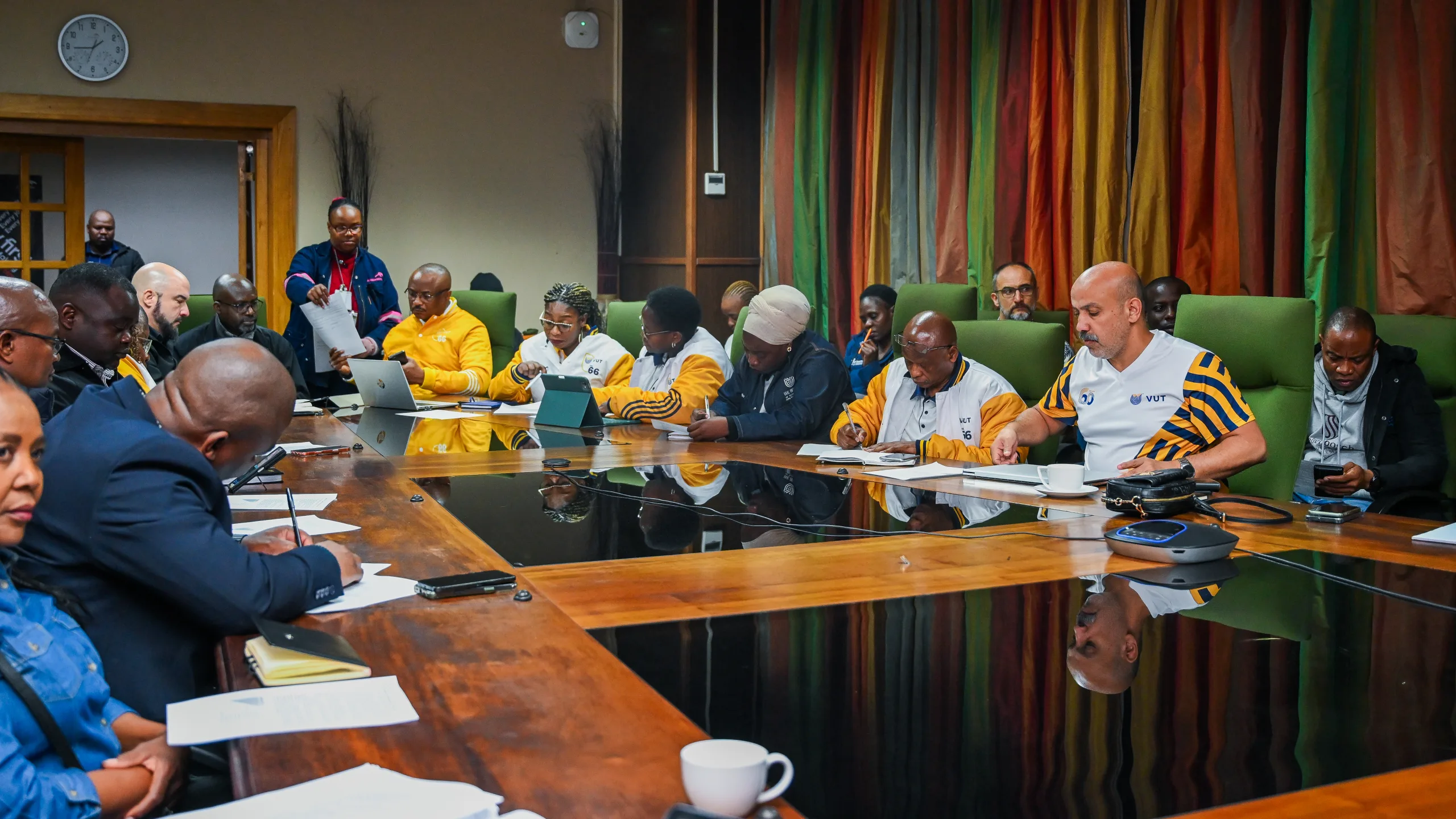
The Vaal University of Technology (VUT) and ArcelorMittal South Africa explored opportunities to strengthen engineering education, workplace learning and postgraduate research during a visit by a VUT delegation on 30 September 2026.
The delegation, comprising university management, heads of departments, executive directors and staff, discussed potential collaboration in curriculum development, electrical training, Women in Engineering and Work-Integrated Learning (WIL). The engagement focused on connecting academic preparation with industry needs and improving pathways into employment.
Ms Busisiwe Dhladhla, Junior Manager: Engineering at ArcelorMittal South Africa, chaired the meeting and outlined the company’s learner development and Candidate Technician programmes. Her presentation showed that 13 of 31 learner technicians progressed into Candidate Technician positions in 2025, an absorption rate of 42%. The company’s 2026 pipeline comprises 18 candidates across several engineering disciplines.
These figures informed discussions on how industry input, workplace exposure and structured training could better support students as they move from university into professional practice.
Dr Grace Kanakana-Katumba, VUT’s Deputy Vice-Chancellor for Teaching and Learning (DVC), called for the relationship to extend to postgraduate research, giving master’s and doctoral students access to industrial environments and practical challenges.
“Our postgraduate students at VUT are doing research that requires practical exposure. We believe that ArcelorMittal South Africa can support our students more, especially as we are living in a digital era,” she said.
She emphasised that this exposure could help graduates apply their research and knowledge in the workplace.
The discussion also addressed qualification verification. Mr David Matsaung, Deputy President of the VUT Convocation, raised concerns about graduates losing opportunities because of difficulties verifying their academic records.
He urged ArcelorMittal South Africa to liaise directly with VUT’s qualification verification structures before disqualifying candidates from training programmes or employment opportunities.
“We believe that a proper verification process will help prevent unnecessary disqualification of qualified graduates and ensure that candidates are treated fairly based on accurate academic records,” he said.
Other proposed areas of cooperation included mentorship and industry exposure for women studying engineering, as well as electrical training that combines academic knowledge with practical experience. WIL opportunities were discussed as a way to familiarise students with industrial processes, technology, safety standards and workplace expectations.
The engagement supports VUT’s Strategy 2033+, which prioritises technological education, research, innovation and industry collaboration. It provided a basis for further discussions on how the two institutions could translate these proposed areas of cooperation into practical opportunities for students, graduates and academics.