
“VUT’s Faculty of Engineering and Technology conducted a mock ECSA accreditation audit to assess readiness, strengthen curriculum quality and enhance graduate competencies ahead of the 2027 accreditation visit.”
06 Ocotober 2026 | Story by: Thomas Rasehloka | Picture: Sifiso Nomzaza
3 minutes read time.
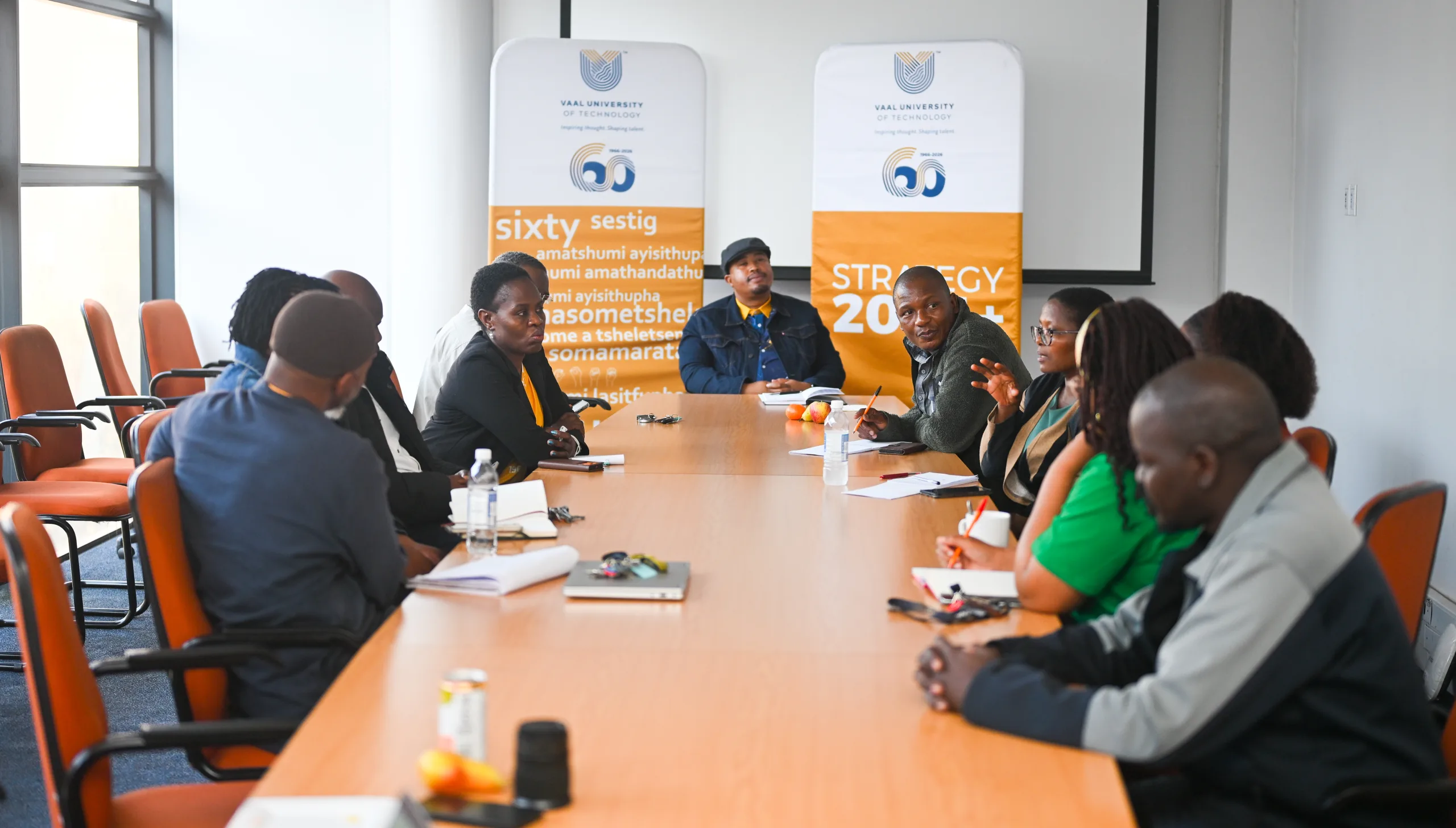
The Faculty of Engineering and Technology (FET) at the Vaal University of Technology (VUT) conducted a mock Engineering Council of South Africa (ECSA) accreditation audit on 21 and 22 September 2026 as part of its preparations for the official accreditation visit scheduled for March 2027.
Conducted by a panel of ECSA experts from various universities, the exercise enabled the Faculty to assess the readiness of its engineering programmes, identify areas requiring improvement and evaluate the effectiveness of systems, processes and supporting evidence required for accreditation.
According to Executive Dean of the Faculty of Engineering and Technology, Prof Khaled Abou-El-Hossein, the mock audit marks an important step in ensuring that the Faculty is fully prepared for the accreditation process.
“The mock audit has enabled us to assess our readiness, identify areas requiring further attention and strengthen our commitment to academic excellence and continuous quality improvement,” said Prof Abou-El-Hossein.
The exercise highlighted opportunities to strengthen the completeness and quality of evidence demonstrating compliance with ECSA requirements, particularly in teaching, learning, assessment and the achievement of graduate attributes. The Faculty is also exploring a comprehensive review of the fundamental knowledge areas underpinning its engineering programmes to improve curriculum coherence and alignment with ECSA standards.
“Our preparations will strengthen curriculum coherence, improve the quality of teaching and learning, and ensure that our graduates have a solid foundation in engineering principles and the practical competencies required to meet industry needs,” he added.
Chairperson of the Mock Accreditation Committee, Prof Daniel Madyira, said the exercise provided valuable insights into the Faculty’s preparedness while also highlighting notable strengths.
He noted that departmental leadership and staff demonstrated enthusiasm throughout the process, with all Self-Evaluation Reports submitted in advance and most supporting documents accessible through the online portal.
“The key recommendations are to develop a plan to review knowledge-area content, particularly Mathematics, Natural Science, and Design and Synthesis; strengthen the assessment and moderation of Graduate Attributes at exit level; and improve the completeness and quality of supporting evidence documentation,” said Prof Madyira.
The panel identified several areas requiring attention, including the review of knowledge-area content, assessment and moderation of graduate attributes at exit level, and the strengthening of supporting evidence required for accreditation.
While most of the required documentation was available during the mock audit, the exercise also helped departments identify outstanding evidence and address potential gaps ahead of the official accreditation visit. Ensuring that all required evidence is compiled and readily accessible before the end of 2026 remains a key priority.
The success of the mock audit was the result of collaboration across the Faculty, with academic and support staff working together to coordinate different aspects of the process.
Dr Josias Viljoen commended the collective effort that contributed to the successful execution of the exercise.
“Each person had a responsibility to ensure that the audit went smoothly. Everyone contributed, and everything worked smoothly,” said Dr Viljoen.
As preparations continue towards the March 2027 accreditation visit, the Faculty remains focused on strengthening its curriculum, teaching and learning practices, quality assurance systems and supporting evidence.
The mock audit has provided an important opportunity to address challenges early, reinforce a culture of continuous improvement and ensure that VUT engineering graduates are equipped with the knowledge, skills and practical competencies required by the profession and industry.