
“VUT’s Regional Transformation Cluster meeting brought together higher education transformation practitioners to advance discussions on inclusion, student support, gender equality, disability rights and institutional accountability.”
06 October 2026 | Story by: Ntebogeleng Digasu | Picture: Keitumetse Mokgope
4 minutes read time.
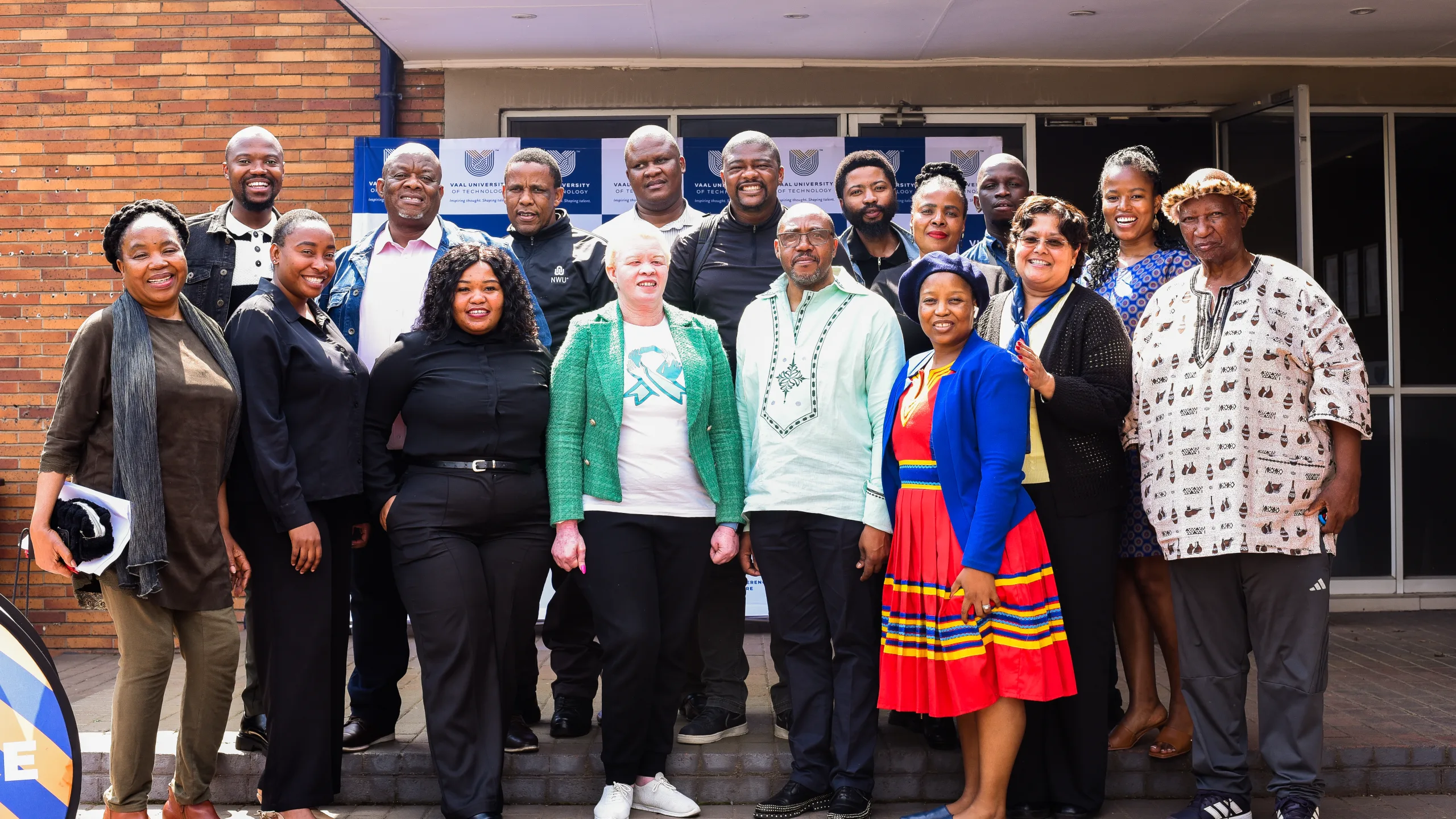
Transformation practitioners, academics and university leaders gathered at the Vaal University of Technology (VUT) on 22 September 2026 to explore how higher education institutions can strengthen inclusion, accountability and social justice within their campuses and communities.
Hosted by VUT’s Social Justice and Transformation Department at the VUT Conference Centre, the Regional Transformation Cluster meeting provided a platform for discussions on institutional culture, student support, gender equality, disability inclusion, African knowledge systems and transformative teaching and learning practices.
The meeting also welcomed former VUT Vice-Chancellor Prof Gordon Zide, whose presence added a historical perspective to ongoing conversations about the University’s transformation journey.
Opening the session, Mr George Mvalo, Director: Strategic Planning and Transformation, stressed that meaningful transformation requires collective responsibility.
“Transformation cannot be achieved by one person or one department. It requires continued engagement, collaboration and accountability from all of us,” he said.
Throughout the meeting, delegates reflected on challenges facing the higher education sector, including institutional culture, representation, student access, employment equity, language transformation and social justice. Participants agreed that transformation should be reflected not only in policy frameworks but also in the daily experiences of staff and students.
Student well-being emerged as a central theme during the discussions. Dr Trishana Soni, Senior Psychologist: Student Counselling and Support, highlighted the importance of holistic student support through counselling, career guidance, crisis intervention and gender-based violence prevention programmes.
“Supporting our students means looking at the whole student. We need to recognise their different experiences, challenges, transitions and the support they need to succeed,” said Dr Soni.
She also shared progress made through the Women in Research Project, a three-year initiative aimed at increasing women’s participation in research and postgraduate studies. Participation in the programme grew from 18 women in its first year to 108 in its third year.
“The growth from 18 women in the first year, to 57 in the second and 108 in the third, shows what can happen when women are given opportunities, support and platforms to grow,” she said.
Addressing transformation from a student support perspective, Ms Faith Macoancoeng, Manager: Student Accommodation, highlighted the role of the Victim Empowerment Centre and campus safety initiatives in combating gender-based violence and supporting vulnerable students.
“We cannot speak about transformation while students continue to experience gender-based violence. Safety and support must be part of the transformation agenda,” she said.
The conversation also turned to teaching and learning. Dr Liemiseng Tjabane, Manager at the Centre for Academic Development, called for learning spaces that reflect inclusion, diversity and the realities of contemporary students.
“Transformation must be experienced where teaching and learning take place. Our classrooms should reflect inclusion, diversity and the changing realities of our students,” said Dr Tjabane.
Other presentations examined collaboration among gender practitioners, the place of African religion and spirituality within transformation discourse, and the importance of ensuring that people with disabilities remain active participants in institutional transformation initiatives.
Mr Mziwoxolo Nkwekwezi, Acting Manager: Disability Services, reminded delegates that meaningful transformation extends beyond dialogue.
“Transformation must include everyone. We cannot talk about an inclusive university if the voices and experiences of people with disabilities are not part of the conversation,” he said.
He further emphasised the importance of implementation and accountability.
“What happens after the meeting is just as important as what happens in the meeting. We need to follow through on the commitments we make.”
The meeting concluded with discussions on strengthening communication, enhancing collaboration between institutions and advancing plans for a future transformation colloquium and workshop.
The overarching message from the gathering was that transformation must move beyond policy discussions and become visible in classrooms, residences, research environments, student support services and campus life. Through initiatives such as the Regional Transformation Cluster meeting, VUT continues to foster dialogue and collective action aimed at building a more inclusive, equitable and responsive higher education sector.