
“VUT’s Centre of Footwear Entrepreneurship earned QCTO assessment centre accreditation, boosting skills development and footwear industry growth.”
28 July 2026 | Story by: Qhawekazi Memani | Picture: Supplied.
4 minutes read time.
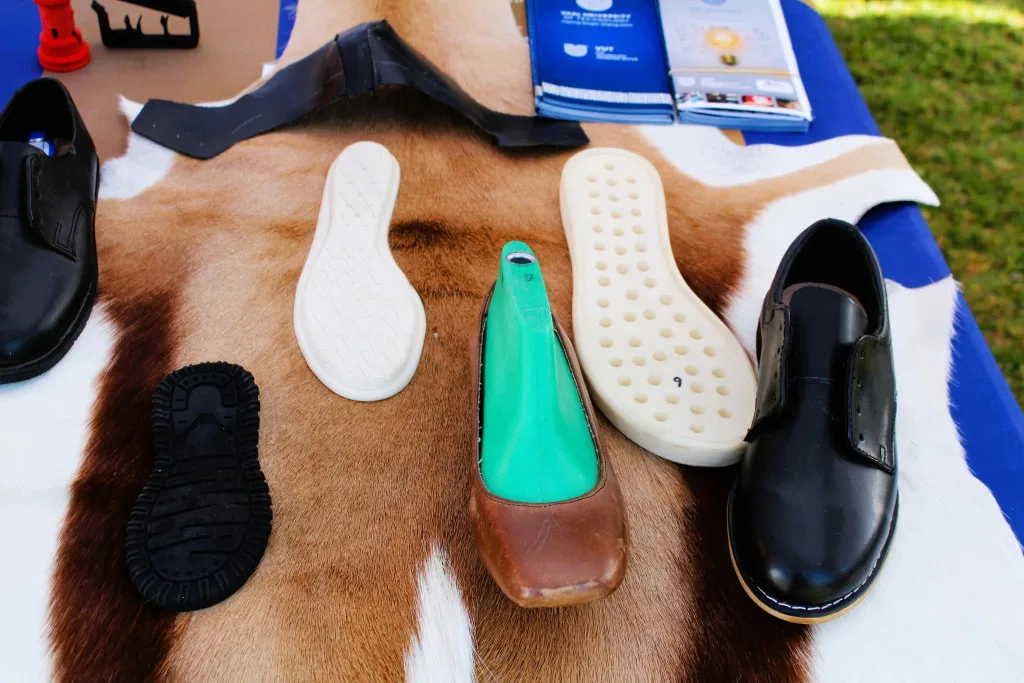
The Vaal University of Technology (VUT) has strengthened its position in occupational skills development after the Quality Council for Trades and Occupations (QCTO) accredited its Centre of Footwear Entrepreneurship (CoFE) as an official assessment centre. The milestone enhances the University’s ability to deliver an end-to-end learning experience by combining accredited training, practical workplace exposure and nationally recognised occupational assessment under one roof.
According to Mr Zacharia Moalahi, Head of the Skills Development Unit within Technology Transfer and Innovation (TTI), the accreditation confirms that VUT has met the rigorous national standards for conducting credible occupational assessments.
“This accreditation confirms that VUT, through the Centre of Footwear Entrepreneurship, has met the QCTO requirements to operate as an accredited assessment centre. It strengthens our ability to support learners from training and practical preparation through to formal assessment, providing a complete skills development pathway,” said Moalahi.
Occupational qualifications rely on standardised, quality-assured assessments before learners can be recognised as competent. By becoming an accredited assessment centre, VUT contributes directly to this critical stage of the qualification process while helping address the shortage of accessible assessment facilities within South Africa’s footwear manufacturing sector.
CoFE is now positioned to combine accredited training, practical production experience and nationally recognised assessment services within a university environment equipped with industry-relevant facilities and expertise. This integrated model is expected to improve learner experiences by reducing unnecessary travel, simplifying
administrative processes and providing a clearer pathway towards nationally recognised occupational competence.
The accreditation also creates new opportunities for collaboration with industry and other accredited training providers. Subject to applicable QCTO and assessment partner requirements, CoFE will be able to assess qualifying candidates from VUT programmes as well as candidates trained by other accredited institutions. The centre will further support funded skills programmes, recognition of workplace competence, and the development of artisans and entrepreneurs in the footwear manufacturing sector.
For industry, the accreditation means greater access to competent graduates whose skills have been assessed against national occupational standards. It also enables closer collaboration between manufacturers and VUT to align practical training with workplace requirements, strengthen employee development and contribute to a sustainable pipeline of skilled professionals across the footwear value chain.
The occupational qualifications offered through CoFE remain vital to preserving scarce technical skills in specialised manufacturing disciplines such as cutting, closing, bottom-stock preparation, lasting and making. These qualifications improve productivity, enhance product quality and create meaningful opportunities for employment and entrepreneurship.
Mr Moalahi explained that preparing for accreditation required extensive institutional readiness. “The biggest challenge was ensuring that every operational and quality assurance requirement was fully addressed, from facilities and equipment to assessment controls, documentation and learner support. Accreditation is evidence-based, meaning readiness had to be demonstrated in practice and not merely described on paper.”
He added that the achievement reflects the dedication of the entire CoFE team.
“I am most proud of the collective commitment that transformed a strategic objective into a nationally recognised capability. This accreditation confirms that the investment in CoFE has created a credible platform that can positively change learners’ prospects and contribute meaningfully to the South African footwear sector.”
Looking ahead, CoFE’s immediate priority is to operationalise the assessment centre responsibly while maintaining full compliance with QCTO requirements. The centre also plans to strengthen industry partnerships, expand assessor and moderator capacity, and build a sustainable pipeline of learners and assessment candidates. Future growth will be guided by sector demand, available resources and relevant approval processes, with opportunities to broaden occupational programmes across the footwear and related manufacturing value chains.
The accreditation also aligns with VUT’s broader vision of producing employable graduates while driving innovation with societal impact. By connecting academic expertise with industry needs, the University continues to demonstrate technology transfer in action and strengthen its reputation as a leading university of technology committed to practical solutions for economic development.
Mr Moalahi encouraged young people considering artisan careers to embrace accredited technical education.
“Technical and artisan careers offer valuable opportunities to build, innovate and create livelihoods. I encourage aspiring artisans to pursue accredited training, take practical learning seriously and continually improve their craft. Competence, discipline and creativity can open doors to employment, further learning and entrepreneurship.”
He concluded by acknowledging the many stakeholders who contributed to the successful accreditation, including VUT’s executive leadership, the Technology Transfer and Innovation Directorate, the CoFE and Skills Development Unit teams, officials from the Quality Council for Trades and Occupations (QCTO) and the Fibre Processing and Manufacturing Sector Education and Training Authority (FP&M SETA), industry partners, colleagues and learners.
As CoFE embarks on this new chapter, the accreditation is expected to leave a lasting legacy by creating sustainable pathways to nationally recognised occupational qualifications, employment, entrepreneurship and a stronger, more competitive South African footwear industry.