
“VUT student leaders reflect on lessons, global connections and new ideas after representing the University at the University Scholars Leadership Symposium 2026 in Bangkok.”
19 August 2026 | Story by: Qhawekazi Memani | Picture: Supplied
7 minutes read time.
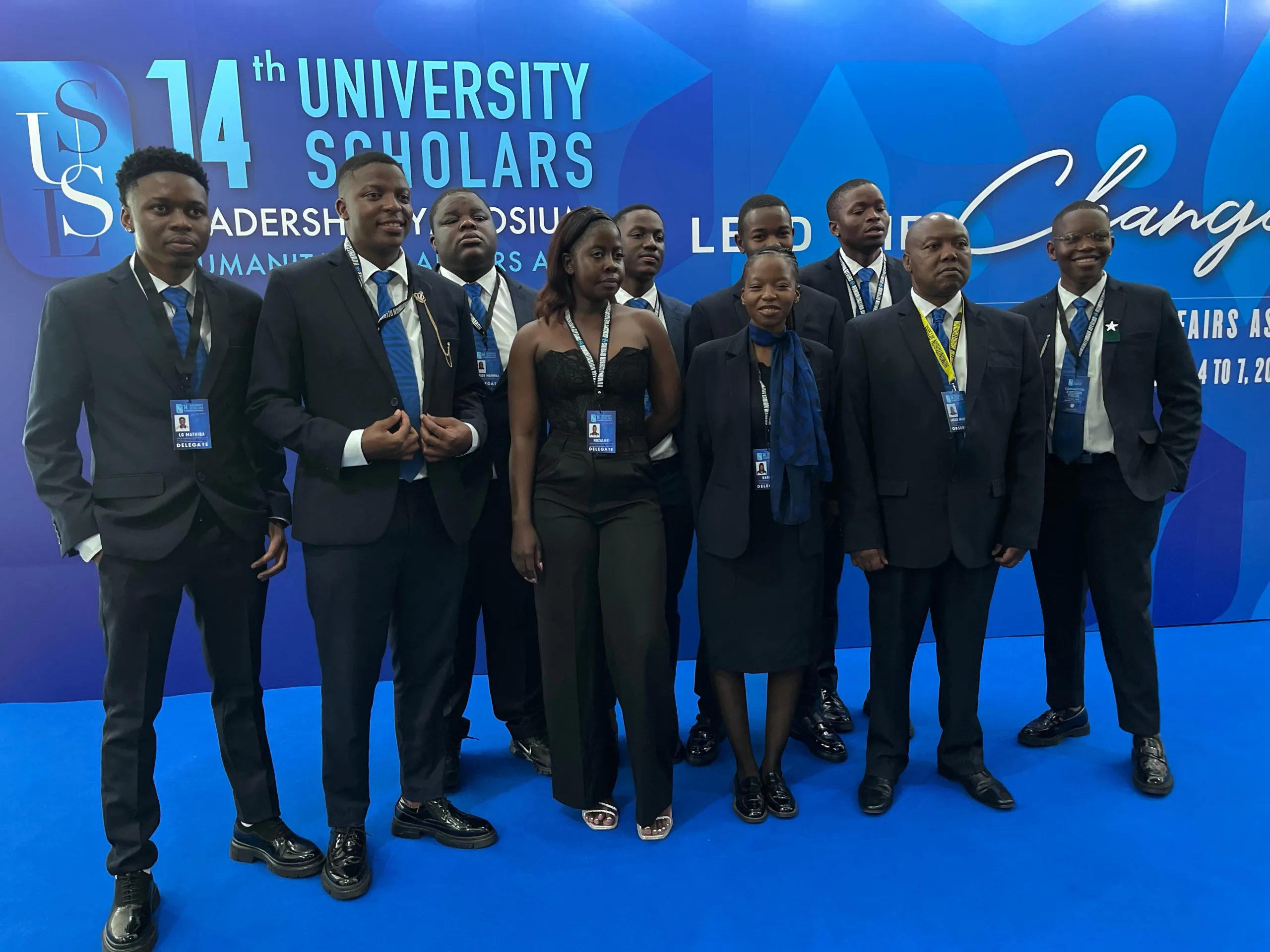
For Mr Omolemo Gordon Tsitsi, stepping into the United Nations Conference Centre in Bangkok was more than entering an internationally recognised venue. It was a moment that forced him to see himself, his studies and his future differently.
Coming from Rustenburg in the North West Province and studying towards an Advanced Diploma in Mechanical Engineering at the Vaal University of Technology (VUT), he had never imagined that his academic journey would one day place him among young leaders from across the world.
“I had never thought that, in any long run, I would see myself attending such a prestigious event,” he says. “I had never thought that I would be representing a well-recognised university and South Africa as a country on an international level.”
That sense of surprise soon gave way to something deeper: a recognition that leadership carries responsibility beyond titles, campuses and national borders.
Mr Tsitsi was part of a VUT delegation that participated in the 14th University Scholars Leadership Symposium (USLS) at the United Nations Conference Centre in Bangkok, Thailand, from 4 to 7 August 2026.
He was joined by VUT Student Representative Council (SRC) representatives Mr Lehlogonolo Hongwane, International Students Officer; Mr Kholofelo Nkululeko Ndaba, Deputy President; Mr Sphiwe Sadiki, Media and Publicity Officer; Mr Junior Mamba, Treasurer General; Mr Karabo Magolego, Gender and Transformation Officer; Ms Ndzalama Baloyi, Legal, Policy and Constitutional Affairs Officer; Mr Mohau Mautla, Secretary General; and Mr Godfrey Mathiba, Deputy Secretary General.
But beyond the international travel and prestige of the venue, it was the conversations with other young people that appear to have left the strongest impression.
For Mr Tsitsi, meeting student leaders from different countries revealed that geographical distance does not necessarily mean that young people are worlds apart.
“My biggest takeaway from engaging with different young leaders from different countries was that, even though we come from different parts of the world, we share common desires and challenges,” he says.
“Engaging with them made me realise that the world is connected more than we think, despite our diverse values, backgrounds and cultures.”
SRC Deputy President Mr Kholofelo Nkululeko Ndaba returned with a similar reflection.
“Participating in USLS 2026 was a very meaningful experience for me as a student leader because it gave me an opportunity to represent VUT on an international platform and interact with student leaders from different countries,” he says.
“It allowed me to understand that student leadership goes beyond our individual institutions and that many students around the world face similar challenges.”
For Mr Ndaba, that realisation shifted the meaning of leadership away from position and towards listening, collaboration and action.
“My most important leadership lesson was that effective leadership is about listening, learning and bringing people together,” he says.
He says the experience demonstrated that there is no single formula for leadership because different societies face different circumstances.
“Different leaders have different experiences, cultures and challenges, but we can learn from one another. A good leader should not only identify problems but should actively work with others to find practical and sustainable solutions.”
That theme of leadership as service also resonated with SRC Media and Publicity Officer Mr Sphiwe Sadiki.
“Participating in USLS 2026 meant representing VUT and South African students on a global stage,” he says.
For him, the experience reinforced the relationship between leadership, communication and the responsibility to tell stories that might otherwise go unheard.
“It showed me that student leadership is about service and storytelling.”
After interacting with young leaders from more than 50 countries, Mr Sadiki was struck by how familiar many of their struggles sounded.
“We face similar challenges like mental health, poverty and access to education, but with different solutions,” he says.
Rather than viewing those differences as divisions, he sees them as an opportunity.
“It showed me that collaboration across borders is possible and that VUT students have valuable solutions to share with the world.”
One lesson, however, stood above the rest.
“The most important lesson was that leadership is rooted in empathy and communication,” he says. “The strongest leaders listened first and used their platforms to amplify others.”
For someone responsible for media and publicity, the lesson also reinforced the value of communication as part of leadership itself.
“Documenting and sharing our impact is just as important as creating it.”
The symposium also encouraged delegates to connect leadership with their academic disciplines and the challenges facing society.
For Mr Tsitsi, climate action emerged as one of the Sustainable Development Goals that resonated most strongly with him. As a Mechanical Engineering student, he sees engineering not simply as a technical profession, but as a potential tool for responding to environmental challenges.
“As a Mechanical Engineering student, I believe I have a responsibility to apply my technical knowledge and skills to contribute to climate action solutions,” he says.
“I hope to design innovative technologies that will be more energy efficient, sustainable and environmentally friendly.”
According to Ms Delsile Mabuza, VUT Admissions and Registration Officer, participation in international programmes such as USLS forms part of the University’s broader commitment to developing students who can engage confidently beyond South Africa.
“VUT’s participation aligns with the University’s vision of equipping graduates to address pressing challenges such as climate change, inequality and sustainable development,” she says.
She adds that such opportunities expose students to different cultures, international networks and new ways of approaching complex challenges.
For the delegates, however, the significance of Bangkok will ultimately be measured by what happens after the photographs, flights and conference sessions have faded.
Mr Tsitsi intends to use his position as Chairperson of the South African Institution of Mechanical Engineering (SAIMechE) VUT Student Chapter to share what he learnt with other students.
“I plan to host events that encourage students to take charge, be innovative and ‘lead the change’,” he says.
Mr Ndaba also believes that the value of international exposure lies in what students bring home.
“I would like to see VUT students turn the lessons from USLS 2026 into practical initiatives rather than allowing the experience to end when we return home,” he says.
His ideas include international student leadership dialogues, student-to-student mentorship programmes, community development projects, environmental sustainability campaigns, entrepreneurship initiatives and cultural exchange programmes.
“Most importantly, the experience should encourage VUT students to become more actively involved in solving challenges within the University and surrounding community.”
Mr Sadiki has similarly proposed initiatives that could keep the momentum alive, including a #VUTLeads media campaign highlighting student and SRC humanitarian projects, faculty-based service hubs aligned with the Sustainable Development Goals, and global student dialogue sessions connecting VUT students with international peers.
For Mr Tsitsi, the journey from Rustenburg to Bangkok has left him with a simple lesson for other students who may doubt whether they belong in spaces beyond what they already know.
Take action.
“It is easy to plan what you want to do, but taking action on those plans is where the real challenge lies,” he says.
And sometimes, he believes, meaningful change begins much smaller than people imagine.
“Small actions can create bigger impacts when they are done with purpose and consistency.”
The VUT delegation may have travelled to Bangkok to learn from the world, but the more important journey now begins at home: turning global exposure into local action, and experience into leadership that makes a difference.