
“VUT hosts the Accessible Tourism Summit 2026, advancing inclusion, disability awareness, and sector transformation through education and industry collaboration.”
24 March 2026 | Story by: Ntebogeleng Digasu | Picture: Sifiso Nomzaza
Metsotso e 3 nako ya go bala.
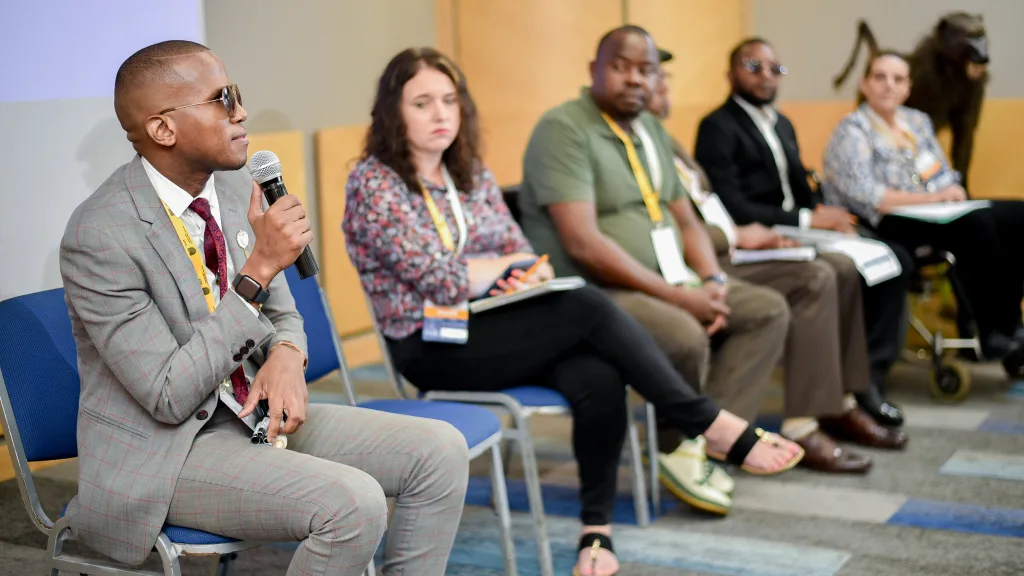
The Vaal University of Technology (VUT) hosted the Accessible Tourism Summit 2026, a two-day engagement held from 19 to 20 March 2026, dedicated to advancing inclusivity and accessibility within the tourism sector. The summit brought together academics, students, government representatives, and industry stakeholders in a shared commitment to dialogue, reflection, and practical solutions.
Day one, held at the VUT Conference Centre, centred on the theme “Africa’s Journey Towards Inclusive and Accessible Tourism: From Policy to Practice.” Proceedings continued on day two at the Desmond Tutu Great Hall under the theme “Preparing for the Future: Curriculum Development and Co-Creation of Pathways to Transformation.” Together, these themes reflected a deliberate shift from intent to implementation, positioning accessibility as both a policy priority and an operational necessity.
The summit was officially opened by Ms Khanyisile Ngidi, Ecotourism Lecturer at VUT, who welcomed delegates and acknowledged the presence of key stakeholders from government, academia, and industry. The opening session underscored the importance of collaboration in building a tourism sector that responds meaningfully to the needs of all individuals.
In his address, Dr Chris Chitumwa, Head of Department (HOD) within the Department of Higher Education at VUT, emphasised the need for collective effort in addressing accessibility challenges, particularly in ensuring that policy frameworks translate into tangible outcomes.
Professor Limpho Lekaota, Head of Department of Tourism and Integrated Communication at VUT, highlighted the University’s commitment to inclusivity. She noted that tourism must be accessible to all, including individuals with disabilities, and stressed the importance of equipping students to contribute meaningfully to a transformed and inclusive industry.
Delivering his presentation virtually, Dr Ivor Ambrose, Managing Director of the European Network for Accessible Tourism, reinforced the need to move beyond theory, urging stakeholders to ensure that the tourism sector is prepared to accommodate and employ graduates in ways that reflect inclusive practice.
The summit featured six dialogue sessions, where panellists explored the lived realities of people with disabilities within the tourism sector. These discussions provided a platform for sharing experiences, identifying systemic challenges, and proposing practical interventions to improve accessibility across the value chain.
Student voices formed an important part of the reflection. Ms Ntando Kazi Yalo, a third-year Tourism student at VUT, described the summit as both educational and empowering:
“This experience has expanded my understanding of accessibility and challenged me to think differently about my role in building an inclusive tourism industry.”
The summit concluded with an educational tour to the Sharpeville Memorial and the Boipatong Monument. This experience reinforced the importance of embedding inclusive practices within heritage tourism, ensuring that spaces of historical significance remain accessible to all.
The Accessible Tourism Summit 2026 affirmed a clear and urgent message. Inclusive tourism is no longer a peripheral concern, it is central to the sustainability and credibility of the sector. Through collaboration between education, industry, and government, the path towards a more equitable tourism landscape is not only possible, it is already taking shape.