
“VUT explores international innovation partnerships in France and Sweden to strengthen science park development, research and commercialisation support.”
11 November 2026 | Story by: Staff Reporter | Picture: Supplied
Metsotso e 5 nako ya go bala.
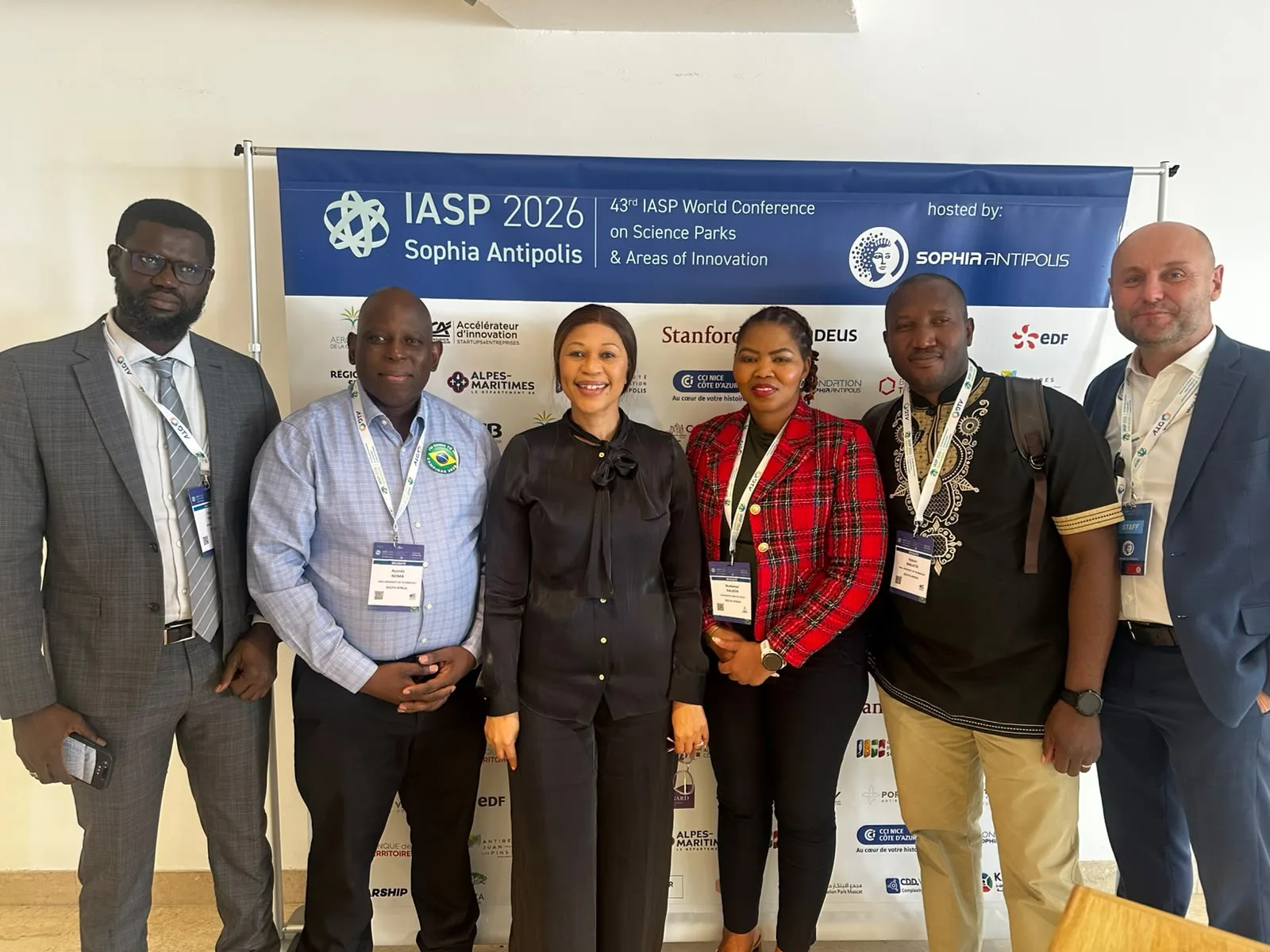
Potential collaboration in science park development, three-dimensional (3D) printing research and research support emerged as key outcomes of a recent Vaal University of Technology (VUT) delegation’s visit to France and Sweden.
The engagements established connections for further discussions and provided practical lessons to inform the continued development of VUT’s Southern Gauteng Science and Technology Park. The long-term objective is to strengthen support for researchers and entrepreneurs to turn their innovations into commercially viable solutions, contributing to enterprise development and economic opportunities in the Vaal.
The delegation comprised Professor Simphiwe Nelana, Deputy Vice-Chancellor: Research, Innovation, Commercialisation and Internationalisation (RICI); Mr Ayanda Noma, Executive Director: Technology Transfer and Innovation (TTI); and Mr Robert Malatsi, Director: Innovation Centre within TTI.
Their programme included participation in the International Association of Science Parks and Areas of Innovation (IASP) World Conference in Cannes, France, followed by engagements with universities, science parks and innovation support organisations in Sweden. The visit followed an engagement at VUT in July 2026 with Ms Lena Miranda, Chief Executive Officer of Linköping Science Park and past President of IASP.
For VUT, the visit offered an opportunity to examine how established innovation ecosystems connect academic research with business development, industry needs and regional priorities. It also enabled the delegation to explore the partnerships, governance arrangements and support services that help innovations progress towards practical application.
Although the Southern Gauteng Science and Technology Park already operates, Mr Noma explained that it remains at an early stage of development. The delegation therefore sought insights into strengthening its management, financial sustainability, stakeholder relationships and capacity to support researchers and entrepreneurs.
The French leg of the programme ran from 26 to 30 October 2026 and included the IASP conference in Cannes and engagements at Sophia Antipolis Science and Technology
Park. Discussions explored the role of science parks in addressing societal needs, supporting enterprise and building sustainable innovation communities.
A significant lesson was the importance of defining a science park’s purpose within its regional context. For VUT, this means considering how the Southern Gauteng Science and Technology Park can connect the University’s research capabilities with the needs and opportunities of the Vaal, while developing partnerships that sustain its work.
The conference also provided perspectives on measuring impact, building industry relationships and maintaining active networks. These insights will inform VUT’s continuing development of the park and its consideration of how best to support the journey from research to commercial application.
From 2 to 4 November, the delegation participated in engagements at Linköping Science Park and Linköping University in Sweden. Representatives from the science park, university and Region Östergötland demonstrated how coordinated regional partnerships support innovation, entrepreneurship and economic growth.
These engagements highlighted the value of organisations working towards shared objectives while retaining distinct responsibilities. They showed how universities contribute research and expertise, science parks facilitate business connections, and regional authorities help create an environment in which innovation can develop.
At Linköping University, discussions also covered research and innovation support, international partnerships and collaboration with African institutions. Examples included technological solutions for wildlife protection, mathematics research partnerships in Kenya and Rwanda, and participation in the South Africa-Sweden University Forum (SASUF).
The examples demonstrated different ways in which academic expertise can respond to practical challenges and support collaboration across national boundaries. For VUT, they also provided insight into the institutional structures needed to develop and maintain such relationships.
Research in 3D printing and additive manufacturing emerged as a specific area for further exploration. Hosted by Ms Lisa Antonsson of the Innovative Materials Arena, the delegation visited the university’s 3D printing laboratory and examined how specialised facilities can support research applications relevant to industry.
The engagement provided a basis for further discussions on potential research collaboration. It also reinforced the importance of connecting technical capabilities with clearly identified needs so that research can produce solutions with commercial and societal value.
On 3 November, the delegation visited Norrköping Science Park, where discussions focused on innovation clusters and the relationships that bring researchers, entrepreneurs, start-ups and established businesses together.
Engagements at HOPE and the nearby Visualisation Centre illustrated how shared facilities and networks can support the exploration of new technologies. The delegation also examined how a science park can develop alongside a university campus while maintaining strong connections with the institution’s research strengths.
These lessons are relevant to VUT’s consideration of how the Southern Gauteng Science and Technology Park can encourage collaboration around shared challenges and opportunities, rather than relying on individual organisations working independently.
The Uppsala engagements included a meeting with Professor Mats Larhed, Adviser for Innovation to the University Board and Chief Officers at Uppsala University. Discussions with representatives of innovation support organisations further demonstrated how complementary structures can work alongside universities to support entrepreneurship and commercialisation.
Reflecting on the visit, Mr Noma said that “successful innovation ecosystems depend on a network of organisations with clearly defined and complementary roles”.
He explained that university innovation offices, science parks, independent support organisations, industry and government each contribute to this network. Relationships between the people leading these organisations are equally important in sustaining cooperation and turning shared interests into practical work.
Mr Noma emphasised that establishing joint programmes is a process requiring continued engagement. The visit marked the beginning of that process, with science park development, 3D printing research and research support identified as areas for further discussion. These remain exploratory opportunities, with no confirmed joint projects announced.
He also highlighted that developing a science park requires time, sustained commitment and participation from stakeholders. Its priorities must reflect the aspirations of the broader innovation community and respond to regional needs.
The immediate outcomes for VUT are new international connections, identified areas for potential collaboration and practical lessons to inform its innovation support environment. Over time, the intended benefit is stronger support for researchers and entrepreneurs to commercialise their innovations, linking the University’s knowledge and expertise with enterprise development in the Vaal.