
“VUT launches its inaugural Men’s Forum to promote men’s wellbeing, responsible masculinity, healthier relationships and a supportive workplace culture.”
25 November 2026 | Story by: Tshepiso Kaibe | Picture: Siphephelo Dlamini
Metsotso e 4 nako ya go bala.
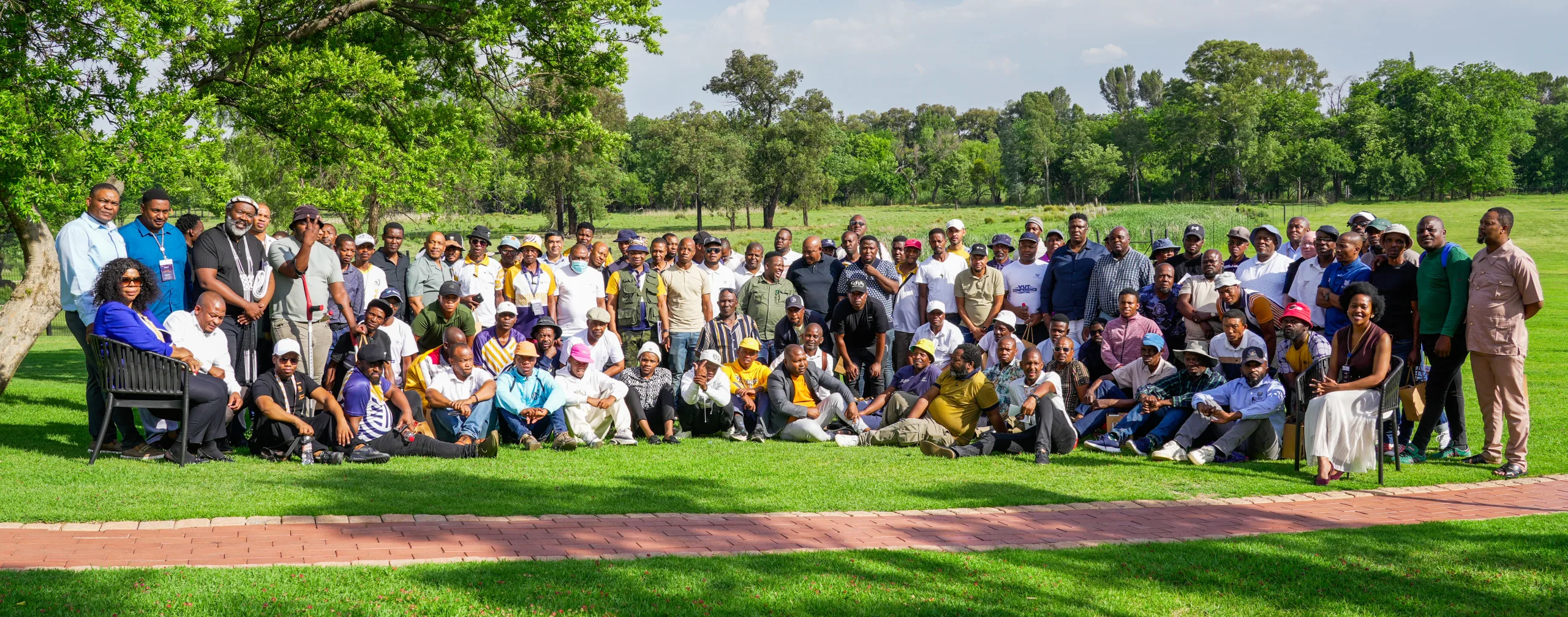
For many men, the pressure to remain strong comes at the expense of their own wellbeing. Behind professional titles and everyday responsibilities lie personal struggles that seldom find their way into workplace conversations. Recognising the need to change this narrative, the Vaal University of Technology (VUT) has established a platform where men can speak openly, seek support and redefine what it means to be strong.
On Thursday, 19 November 2026, VUT launched its inaugural Men’s Forum at Emerald Hotel in Vanderbijlpark, bringing together employees, institutional leaders and industry experts. Held in partnership with the Mail & Guardian, the launch coincided with International Men’s Day under the theme “Stronger Men, Stronger Families, Stronger Communities, Stronger Workplace”.
Envisioned as a sustainable platform rather than a once-off engagement, the Forum seeks to promote responsible masculinity, emotional wellbeing, personal development and healthier relationships.
Delivering the opening remarks on behalf of University Management, Professor Simphiwe Nelana, VUT Deputy Vice-Chancellor for Research, Innovation, Commercialisation and Internationalisation (RICI), emphasised that institutional success cannot be divorced from the wellbeing of employees.
“We cannot separate institutional performance from employee wellbeing. We cannot expect our employees to contribute to the development of the university while remaining indifferent to the challenges affecting their personal lives,” he said.
His remarks reinforced VUT’s commitment to building a supportive, people-centred institutional culture, as articulated in its Strategy 2033+.
Mr Sechaba Motsieloa, Managing Director of EmpowaWorx, highlighted the consequences of men suppressing their emotions and the importance of creating environments where they can share their experiences without judgement.
“We walk in silence, but in that silence, we end up bleeding on those that we come across,” he remarked.
Drawing on the EmpowaMen initiative, Mr Motsieloa challenged participants to reflect on their identities and sustain these conversations beyond the launch.
Delivering a keynote address titled The State of Men in Modern Society, Mr Rabbuh Raletsemo, Deputy Director for Public Education and Information at the Commission for Gender Equality (CGE), challenged conventional perceptions of masculinity that equate a man’s worth with his ability to provide or exercise authority.
While acknowledging the pressures associated with these expectations, particularly under difficult economic circumstances, he cautioned that personal frustrations must never justify harmful behaviour. He encouraged men to embrace respectful relationships, understand sexual consent and actively contribute to addressing gender-based violence and femicide (GBVF).
The importance of breaking intergenerational cycles of violence was reinforced by Dr Zukisani Mxoli, a leadership and personal development consultant, who encouraged participants to confront unresolved childhood experiences.
“Don’t beat up your wife just because your father beat up his wife. You saw the pain, and it was not good,” he urged.
Similarly, Mr Fred Bohasu, an independent consultant at Impact Amalgamate, encouraged men to replace unhealthy competition with mutual support, drawing parallels with long-distance runners who rely on others to achieve their goals.
“Be someone else’s pacemaker. Or be another man’s pacemaker,” he encouraged.
Physical health also featured prominently. Dr Geeva Pillay, Director of RTE Herbal Solutions, challenged the perception that seeking medical attention is a sign of weakness, while Mr Lesang Maiketso, Wellness Specialist at Bestmed, emphasised the importance of preventive healthcare.
The strong uptake of prostate cancer screening services during the event underscored the importance of making healthcare interventions accessible to men.
Addressing mental health through a presentation titled The Man Behind the Title, Mr Mzamo Mdluli, a clinical psychologist from the Gauteng Department of Health, reminded participants that professional status does not shield individuals from emotional difficulties.
“Before you can express an emotion, you need to be able to identify it,” he explained.
Financial wellbeing was another area of focus, with Mr Thato Emmanuel Mfono cautioning against the pressure to maintain unrealistic lifestyles, particularly those portrayed on social media. He encouraged participants to prioritise financial literacy and sustainable wealth creation.
The proceedings culminated in the signing of a symbolic pledge by the Forum’s leadership, affirming its commitment to combating GBVF and promoting respectful relationships.
Mr Kabi Metsing, VUT Employee Wellness Specialist, emphasised that establishing a platform for men should not be interpreted as excluding or undermining women, but rather as an opportunity to foster greater accountability and contribute to safer communities.
Mr Tshepo Thekiso, Employee Relations Consultant within VUT’s Human Resources Department, reaffirmed the University’s commitment to sustaining the initiative.
“Today was not the last; it was just the beginning. This flight is taking off,” he remarked.
Beyond advancing VUT’s Strategy 2033+, the Forum aligns with the United Nations Sustainable Development Goals (SDGs), particularly SDG 3 (Good Health and Wellbeing) and SDG 5 (Gender Equality).
Ultimately, the success of the Forum will not be measured solely by attendance at its inaugural launch, but by its ability to inspire behavioural change, encourage men to seek support and cultivate a culture in which strength is defined not by silence or dominance, but by empathy, accountability and the courage to embrace vulnerability.