
“VUT’s Faculty of Human Sciences Postgraduate Colloquium promotes research excellence, critical thinking and responsible AI use in support of Strategy 2033+.”
06 October 2026 | Story by: Nontobeko Moimane | Picture: Sifiso Nomzaza
3 minutes read time.
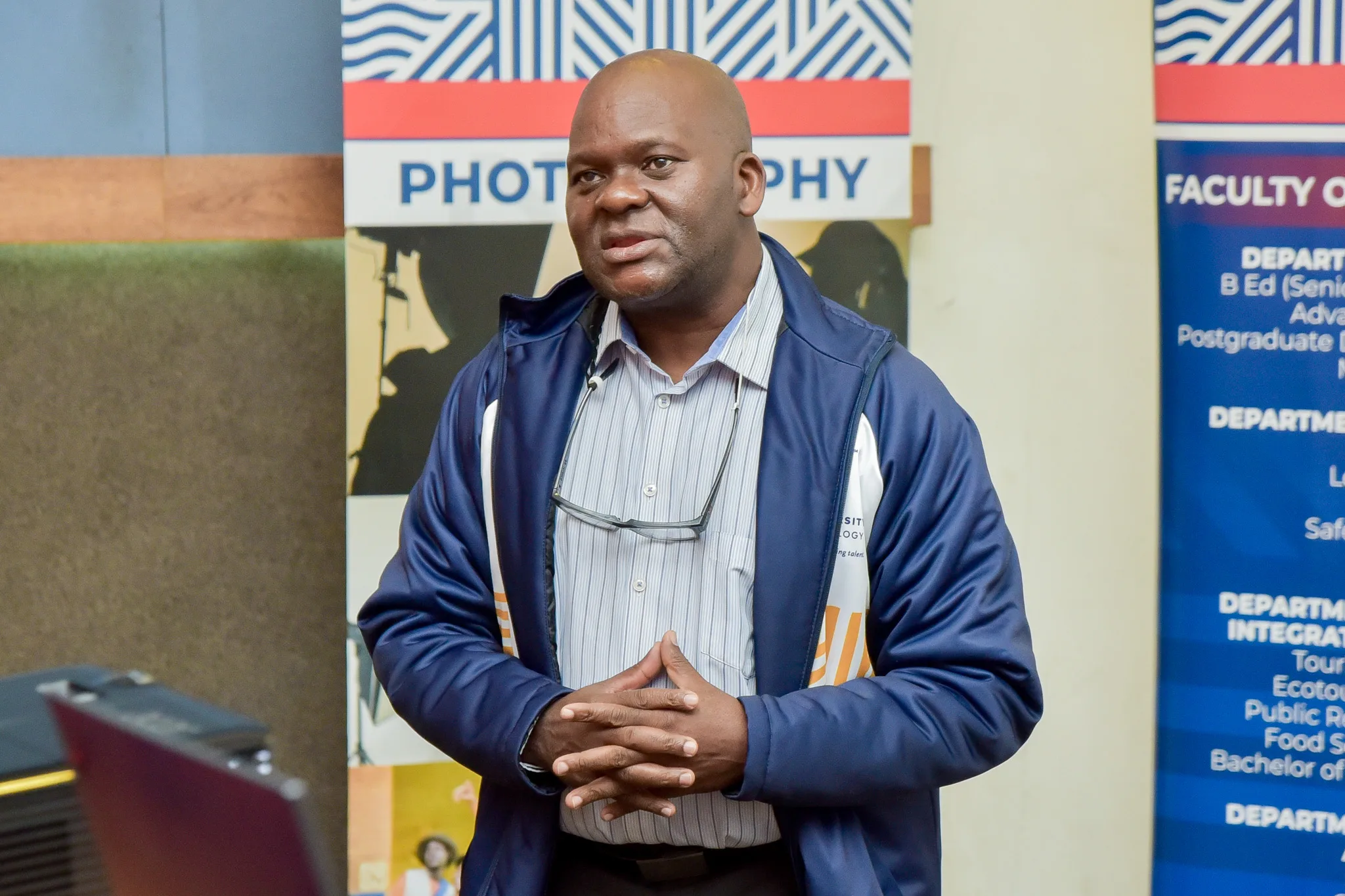
The Faculty of Human Sciences at the Vaal University of Technology (VUT) used its Postgraduate Colloquium on 23 September 2026 to encourage emerging scholars to strengthen their research capabilities while navigating the opportunities and challenges presented by artificial intelligence (AI).
Held at the VUT PS Building, the colloquium brought together postgraduate students, academics and supervisors to present research, exchange ideas and engage in discussions on scholarly excellence and responsible AI use.
Welcoming delegates, Executive Dean of the Faculty of Human Sciences Prof Lazarus Maleho described the colloquium as more than an academic requirement, emphasising its role in helping Master’s and doctoral students refine their research and receive constructive feedback.
He encouraged students to identify knowledge gaps and pursue meaningful research that contributes to society.
“What is already known? Identify what is unexplored and have the discipline and perseverance to pursue credible answers,” said Prof Maleho.
He also urged researchers to question assumptions, interrogate methodologies and engage critically with their work and that of others.
The colloquium showcased research across various disciplines, including tourism, hospitality, entrepreneurship and digital marketing, reflecting the diverse scholarship emerging from the Faculty.
Delivering the keynote address, Prof Tranos Zuva, Research Professor in the Faculty of Applied and Computer Sciences, focused on the growing role of generative AI in teaching and research. Rather than debating whether AI is good or bad, he emphasised the importance of using the technology responsibly.
“AI is a tool. We must use it responsibly,” he said.
Prof Zuva stressed that AI should support, rather than replace, the researcher and supervisor.
“AI should not replace the supervisor, and it should not replace the student,” he said.
He explained that while AI can assist with tasks such as explaining concepts, navigating literature, supporting coding and improving language, researchers remain responsible for analysing information, interpreting findings and producing original scholarly contributions.
Prof Zuva also cautioned students against accepting AI-generated responses without verification.
“Do not assume AI is accurate,” he warned.
He encouraged researchers to critically evaluate information generated by AI and determine whether it reflects the realities of the communities, institutions and environments being studied.
The keynote further highlighted ethical considerations, including transparency, accountability and the protection of sensitive information when using AI tools. Students were encouraged to disclose AI usage to supervisors and ensure that technology is used in line with institutional requirements and academic integrity principles.
According to Prof Zuva, the emergence of AI makes effective supervision even more important.
“The arrival of AI does not make supervision less important; it makes good supervision more important,” he said.
Beyond discussions on technology, the colloquium provided postgraduate students with an opportunity to develop confidence in presenting and defending their research.
Prof Zuva described the event as a valuable training platform where researchers learn to articulate ideas, justify methodologies and respond to critical questions.
The value of the colloquium was also reflected in the experience of Mr Jano Myburgh, a Junior Lecturer in the Department of Design and Studio Art at the Central University of Technology (CUT), who commended the quality of research being undertaken at VUT.
“It was lovely visiting VUT, and the staff are awesome, so it is nice being back here,” he said.
Myburgh also highlighted the innovative work being conducted within the University’s Art Department, describing the research as progressive and impactful.
Students who presented their work received certificates in recognition of their participation and contribution to the programme.
As VUT continues implementing Strategy 2033+, the Postgraduate Colloquium remains an important platform for developing the next generation of researchers. By fostering critical thinking, academic dialogue and responsible use of emerging technologies, the initiative contributes to building a research culture that is innovative, relevant and responsive to societal needs.