
“VUT’s Technology Transfer Office brought women together to explore how ideas, research and creativity can be protected, commercialised and transformed into meaningful impact.”
25 August 2026 | Story by: Tshepiso Kaibe | Picture: Keitumetse Mokgope
Nako ea ho bala metsotso e 4.
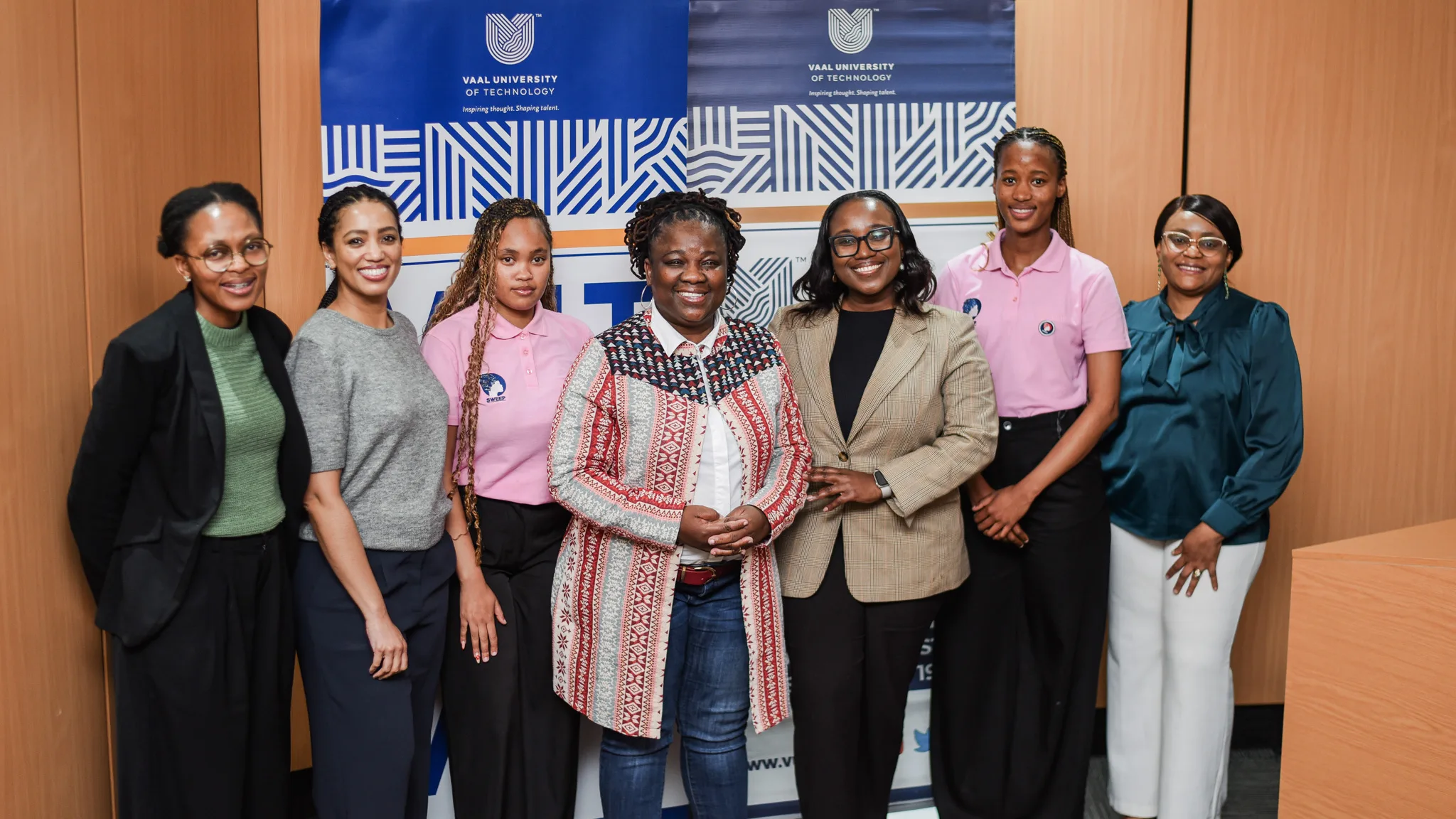
An idea may hold enormous promise, but without protection, knowledge and the right support, its value can easily be lost.
This message shaped the Vaal University of Technology’s (VUT) Women’s Dialogue on Intellectual Property, hosted by the Technology Transfer Office (TTO) on 20 August 2026 under the theme, “Empowering Women to Create, Protect and Commercialise”.
Bringing together researchers, entrepreneurs and creatives, the dialogue encouraged women to move beyond generating ideas and consider how they can protect, own and derive value from their work.
Mr Ayanda Noma, Executive Director for the TTO, emphasised that innovation is not confined to laboratories or a single discipline. It can emerge from unmet community needs, indigenous knowledge, creative practice or a student approaching a familiar problem differently.
He encouraged participants to view intellectual property (IP) as more than patents, trademarks and copyright. It is also a means of protecting the knowledge, research and creativity already present within communities.
This message came to life through the keynote address by Professor Moganedi Kgabo from the University of Limpopo, titled “Her Ideas, Her Innovation, Her IP”.
Professor Kgabo’s work with marula began with a fruit that formed part of everyday life in her childhood community. It later developed into doctoral research, innovation and intellectual property. Her story demonstrated that innovation does not always begin with something entirely new. Sometimes, it starts by recognising the value of knowledge that communities have carried for generations.
She explained how an idea can be developed into “a workable concept” and eventually into intellectual property. Her work also recognises indigenous knowledge holders as contributors to innovation, connecting scientific research with community knowledge and the potential to improve livelihoods.
Ms Mercia Fynn from Adams & Adams focused on one of the most vulnerable stages of innovation: the period before an idea has been formally protected.
“Every innovation begins with an idea,” she said, cautioning that an idea remains exposed while it exists only in someone’s mind or notebook.
She urged researchers to approach the TTO before publishing, presenting or publicly discussing potentially protectable work. “Disclose your idea to your TTO before you publish it, before you present it and certainly before you discuss it publicly,” she advised.
Ms Fynn added that intellectual property protection is not only about preventing the unauthorised use of an idea. It can also create opportunities for research funding, licensing, industry partnerships, spin-off companies and wider economic participation.
For Ms Palesa Mokoaleli, the dialogue revealed support she had not previously known was available to postgraduate researchers.
“I was not aware of the rights I have to my intellectual property or the support available to me as a researcher,” she said. “This was very informative, and I will be using the TTO’s services for my research.”
Ms Tseleng Mokhele, Photography Lecturer in VUT’s Department of Visual Arts and Design, turned the spotlight towards creatives, who may focus on producing strong work without giving equal attention to contracts, ownership and commercial value.
Using photography and digital platforms as examples, she highlighted the importance of retaining ownership and understanding reproduction rights. She reminded participants that creative work can continue generating value long after it has been produced.
Ms Martha Ikome, Intellectual Property Advisor and Acting Senior Manager in the TTO, described the office’s work through three areas: education, protection and collaboration. She also positioned the TTO as a bridge between researchers and industry.
“Let us try to create research for impact,” she said.
Ultimately, the dialogue invited women to ask more than, “What can I create?” It urged them to consider what their work is worth, who owns it and how far it can go.
For researchers, artists and innovators, that shift from creation to ownership may be where meaningful empowerment begins.