
“At the VUT Teaching and Learning Conference 2026, academics launched two scholarly publications exploring sustainability, artificial intelligence and the future of higher education learning.”
15 September 2026 | Story by: Tayron Mhlongo | Picture: Keitumetse Mokgope
4 minutes read time.
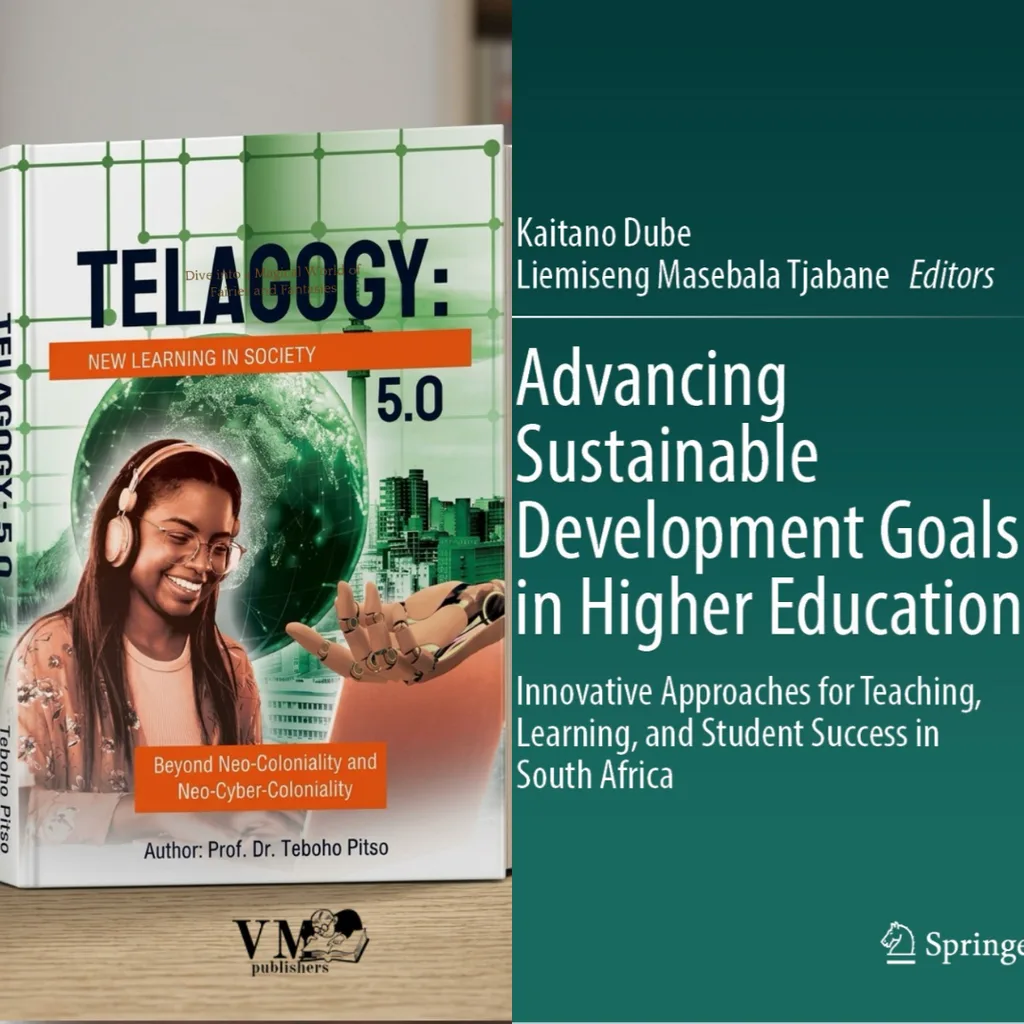
Academics at the Vaal University of Technology (VUT) are helping shape the future of higher education through new scholarship on sustainability, artificial intelligence (AI), and innovative learning practices. This was highlighted during the launch of two books at the VUT Teaching and Learning Conference 2026, where educators and researchers gathered to explore how universities can respond to the opportunities and challenges of a rapidly changing world.
Held at Emerald Hotel and Casino in Vanderbijlpark on 08-10 September 2026, the conference brought together academics, researchers, education leaders and industry partners under the theme, “Reimagining Teaching and Learning for the Future: Innovation, Inclusion, and Impact in Higher Education.” The launch of two Scholarship of Teaching and Learning (SoTL) publications served as a powerful reminder of the role universities play not only in teaching students, but also in producing knowledge that influences educational practice and policy locally and globally.
Opening the launch, Executive Director of the Centre for Academic Development (CAD), Prof Muntuwenkosi Chili, praised the scholars whose contributions made the publications possible.
“But tonight, the achievement belongs to those who have written these chapters, as well as the editors,” he said.
The two publications, Advancing Sustainable Development Goals in Higher Education and Telagogy: New Learning in Society 5.0, emerged from writing retreats hosted by VUT and discussions generated during the 2025 Teaching and Learning Conference.
Prof Chili explained that the initiative was driven by a belief that knowledge created within universities should extend beyond lecture halls and reach broader academic and societal audiences.
The publications, he said, demonstrate what can be achieved when academics are provided with opportunities, support structures and the confidence to share their expertise with the wider scholarly community. He also commended VUT academics for their efforts to transform teaching and learning through innovation, digital technologies, artificial intelligence, work-integrated learning and student success initiatives.
Providing insight into Advancing Sustainable Development Goals in Higher Education, Prof Kaitano Dube, former Full Professor in VUT’s Department of Ecotourism and currently a Distinguished Professor at the University of South Africa (UNISA), reflected on the enduring value of scholarly publishing.
He noted that books preserve knowledge, shape narratives and allow ideas to outlive their authors, creating a legacy that can influence future generations.
Prof Dube also emphasised the importance of African scholars contributing their own perspectives to global knowledge production.
“One of the good things about investing in this book publication is that we can control the narrative. Moreover, that narrative, from an African perspective, is that of transformation,” he said.
He added that the publication had already begun reaching international audiences, having been made available on Amazon months before its official launch.
The second publication, Telagogy: New Learning in Society 5.0, was introduced by Prof Tebogo Pitso, Manager of the Centre for Research Capacity Development at VUT. The book explores how teaching and learning must evolve in response to technological advancements and changing societal needs.
Discussing the rise of AI, Prof Pitso highlighted how developments in automation and intelligent technologies have transformed conversations about the future of education. He referenced growing discussions around the convergence of human and artificial intelligence and the implications this could have for learning and knowledge creation.
The concept of telagogy presents a new educational framework for the cognitive age. It moves beyond traditional classroom-centred approaches by promoting web-based, asynchronous and AI-supported learning environments that are flexible, personalised and accessible. The approach recognises that modern learners increasingly expect educational experiences that mirror the convenience and responsiveness of contemporary digital platforms.
Despite the growing influence of technology, Prof Pitso stressed that the human dimension of education must remain central.
“We are trying to make ourselves better. Other people enhance the quality of who we are. Moreover, that is the most important part,” he said.
The launch of the two publications reinforced VUT’s position as a producer of knowledge that contributes to national and international conversations about the future of higher education. By supporting scholarship on sustainability, innovation, AI and emerging learning models, the University continues to strengthen its impact beyond the classroom while advancing thought leadership in higher education.
Aligned with VUT’s Strategy 2033+, which seeks to produce future-ready graduates, drive impactful research and innovation, and strengthen societal impact, the conference demonstrated how scholarly collaboration can generate solutions to complex educational challenges.
More importantly, the VUT Teaching and Learning Conference 2026 highlighted that the future of higher education will not be shaped by technology alone. It will depend on inclusive leadership, African-centred scholarship, academic confidence and a shared commitment to student success. Through its research, publications and partnerships,
VUT is helping shape that future while ensuring that knowledge generated today continues to influence teaching and learning for years to come.