
“VUT Fine Arts students explored decolonisation through debate, artistic expression and indigenous knowledge, connecting classroom learning with lived experience.”
22 October 2026 | Story by: Tayron Mhlongo | Picture: Keitumetse Mokgope
Nako ea ho bala metsotso e 3.
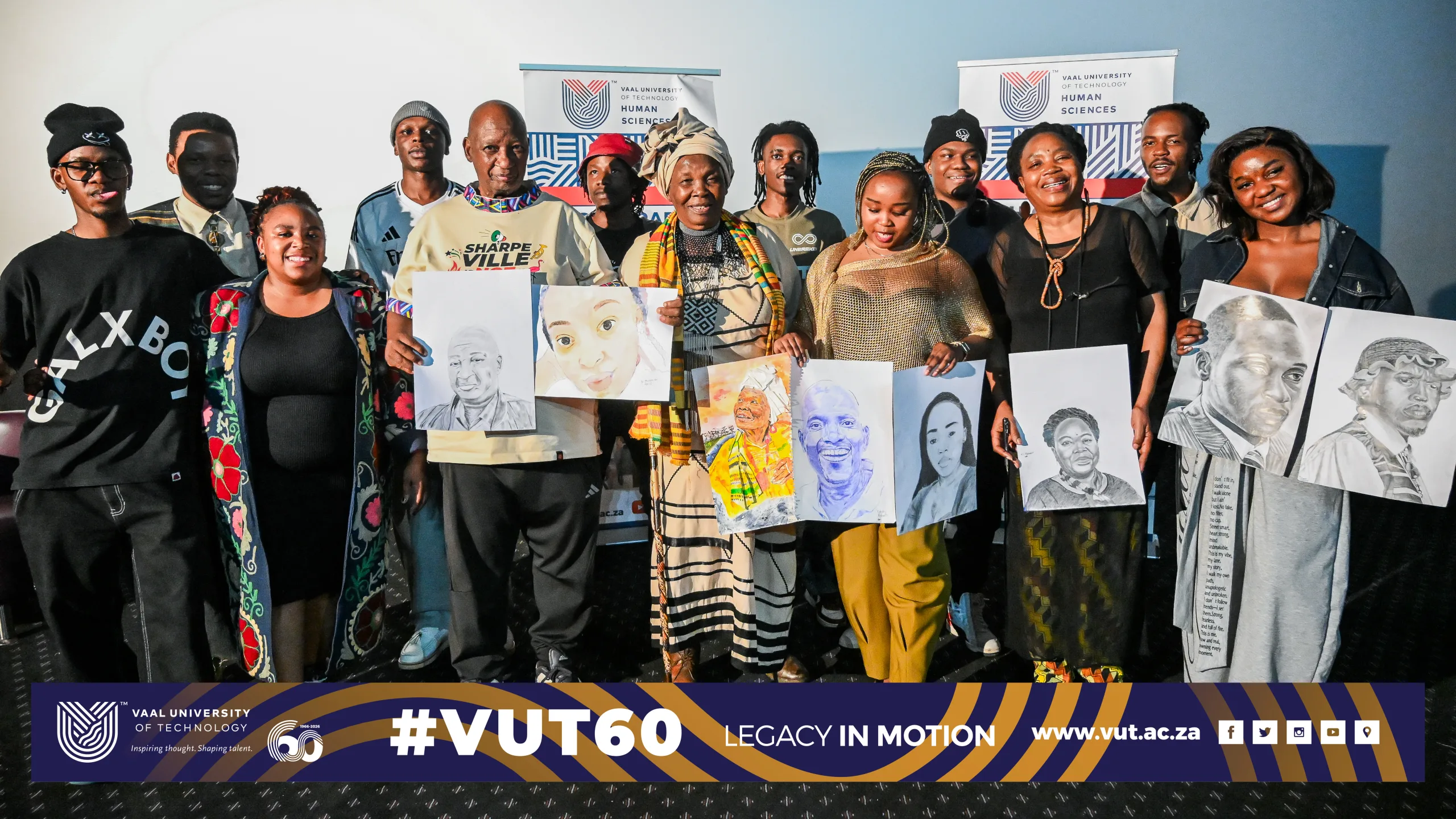
Art can preserve memory, challenge inherited narratives and give expression to difficult ideas. These possibilities took centre stage when Fine Arts students at the Vaal University of Technology (VUT) participated in a public debate on decolonisation.
The department hosted its second Art Theory and Visual Studies Student Debate at Ster-Kinekor in Vaal Mall on 9 October 2026. The motion, “Decolonisation is humanity’s greatest leap,” challenged students to examine competing perspectives through scholarship, history and artistic practice.
Professor Teboho Pitso, Senior Manager at the Centre for Research Capacity Development and founder of Telagogy, was among the judges. He emphasised the importance of providing constructive platforms where students can express differing views respectfully.
“This platform allows them to debate issues they support or oppose in a dignified way,” he said.
Fellow judge Dr Masebala Tjabane, an academic staff development specialist in VUT’s Centre for Academic Development, commended the initiative for placing student perspectives at the centre of academic engagement.
“It is about time that VUT celebrates and elevates student voice. Through this debate, we can hear that our students are engaged with current issues and are relevant to the moment,” she said.
Dr Tjabane also praised participants for drawing on local and international scholarship to explore questions relevant to South Africa, the African continent and the wider world.
Arguing in favour of the motion were Mr Vusi Khumalo, Mr Kwanele Nyivana, Ms Vutlhari Madelane, Ms Ntokozo Tshabalala and Mr Darlingboy Mashinini. The opposing team comprised Mr Angelo Sithole, Ms Bontle Sebueng, Ms Mpumi Majola, Ms Oratile Thinane and Mr Ndiyabonga Nonkelela.
Mr Mashinini, a second-year Fine Arts student, described the experience as challenging and educational.
“The debate was fun and thought-provoking, but most of all, it was educational. It pushed me to give my best because we had to engage with complex questions about art and history,” he said.
Ms Sebueng said the experience encouraged students to move beyond familiar classroom discussions and consider the practical relevance of their learning.
“It was a valuable opportunity to come together, exchange ideas and debate in a setting outside our usual lecture rooms. It also helped us think about how these discussions connect to the world beyond the classroom,” she said.
Guest artist Mme Mmakgabo Helen Sebidi shared reflections on her journey as a painter and sculptor, highlighting perseverance and the preservation of indigenous knowledge.
“Fight with your works, not your mouth,” she told students, encouraging them to communicate their ideas and convictions through their creative practice. Her reflections connected artistic expression with memory, identity and knowledge passed between generations.
The programme also included a screening of Night of the Massacre, a documentary by Mr Charles Khuele about the Sebokeng night vigil massacre. An African Indigenous Knowledge Systems exhibition featured work by former VUT students, alongside artworks presented by current VUT curators.
Debate facilitator and lecturer Ms Zanele Lucia Radebe said the event helped students connect academic concepts with lived experience.
“It benefits our students because they can take what they learn in class and put it into practice,” she said.
She explained that the discussions encouraged students to explore how artists have contributed to struggles for liberation and how history and memory continue to shape society.
By bringing together debate, art and historical reflection, the event created space for students to test ideas, engage with different perspectives and consider their responsibilities as emerging artists. It also supported the emphasis of VUT’s Strategy 2033+ on learning, innovation and socio-economic transformation.