
“Senior Lecturer Dr Ibrahim reflects on his promotion journey, research in sustainable materials and renewable energy, and his evolving teaching philosophy. Discover his impact within South African higher education and at the Vaal University of Technology.”
31 March 2026 | Story by: Qhawekazi Memani | Picture:
Nako ea ho bala metsotso e 4.
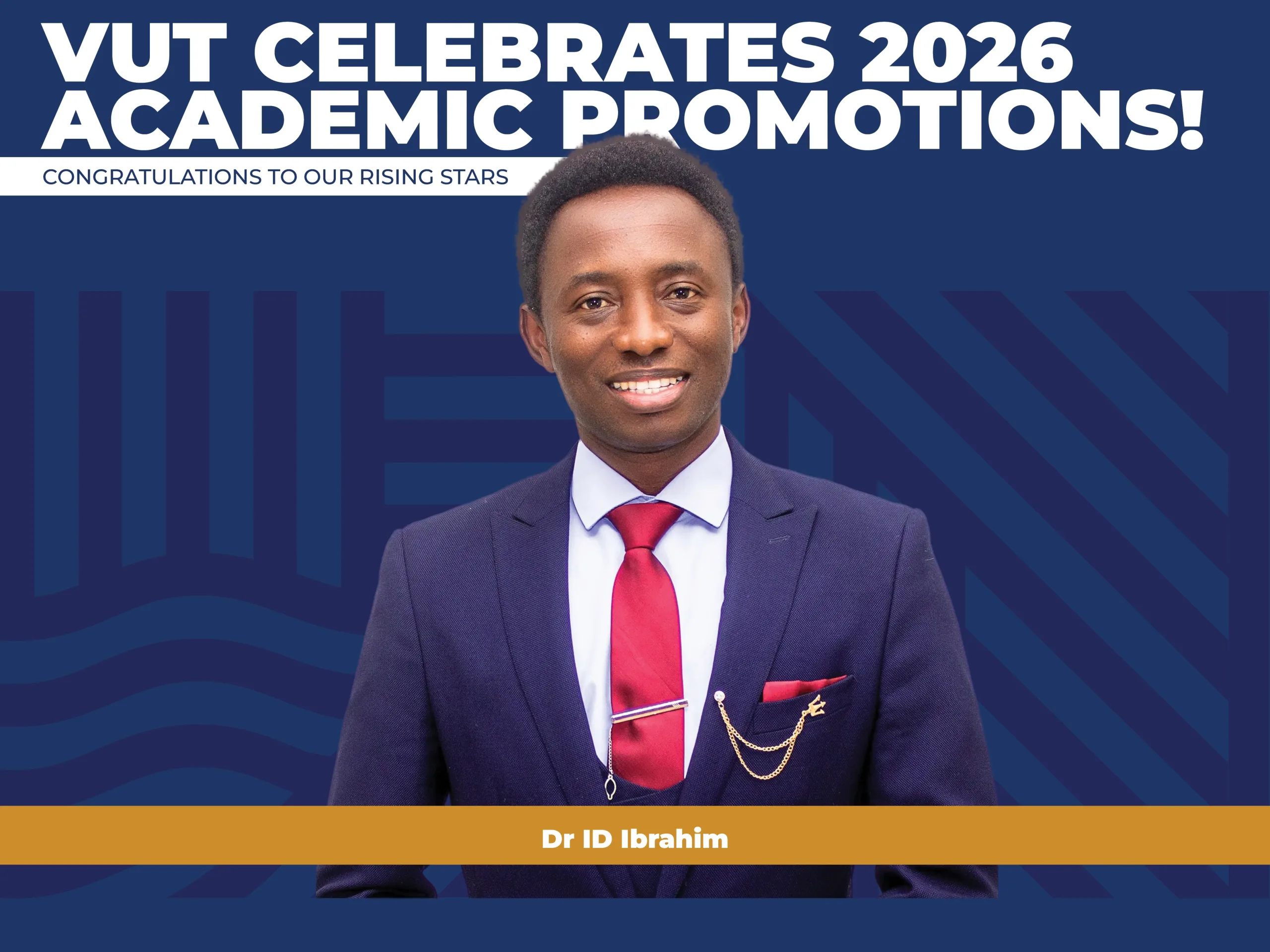
Dr David Ibrahim, Senior Lecturer in the Department of Industrial Engineering, Operations Management, and Mechanical Engineering at the Vaal University of Technology (VUT), Faculty of Engineering and Technology, has reached a defining milestone in his academic journey with his promotion to Senior Lecturer.
In this reflective engagement, he speaks with quiet conviction about the moment that affirmed years of disciplined effort, intellectual growth, and purpose-driven work.
“On that faithful morning, I prayed to God before leaving for the office that he would bring good news that day,” Dr Ibrahim recalls. “After arriving on campus for a first-year orientation session, I received a call from HR asking me to come to the office. When I walked in, I was told, ‘Congratulations, your promotion was approved.’ In my heart, I said, ‘Thank you, Lord, for hearing and answering my prayers.’ It was a deeply joyful moment.”
That moment, he suggests, was not accidental but earned through consistency.
“Whatever good and meaningful work you know how to do, continue doing it. It will pay off in the end. Even when it feels as though no one is watching, your efforts are being recognised, and the reward will come at the right time.”
Since joining the University as a Lecturer, his role has evolved significantly.
“My journey has moved from primarily teaching and academic support to encompassing research leadership, postgraduate supervision, and institutional service,” he explains. “I now lead research initiatives, supervise master’s and doctoral students, and focus on innovation, funding acquisition, and translating research into solutions that are relevant to industry.”
His teaching philosophy has matured alongside this growth.
“My approach has shifted from content delivery to student-centred, research-informed learning. I emphasise problem-solving, critical thinking, and real-world application, supported by technology and active learning strategies.”
Rather than treating teaching and research as competing priorities, he has chosen to integrate them.
“I align my teaching with my research focus, using classroom engagement to generate ideas while postgraduate supervision contributes directly to research outputs. It is a mutually reinforcing relationship.”
Dr Ibrahim’s research trajectory reflects a strong interdisciplinary orientation. His work spans smart materials, fibres, composites, nanotechnology, material recycling, renewable energy, and climate change. These areas position him within a growing field of scholarship that seeks practical, scalable solutions to complex societal and industrial challenges.
“My research is grounded in application,” he says. “It focuses on developing solutions in advanced materials, renewable energy systems, and sustainable manufacturing. Impact, for me, means influencing industry, advancing knowledge, mentoring students, and contributing to sustainable societal development.”
In his leadership roles as Acting Departmental Research and Innovation Committee Chairperson and Teaching and Learning Coordinator, he is equally committed to shaping institutional culture.
“I see my role as strengthening both research and teaching within the department. This includes mentoring postgraduate students, supporting early-career academics, and fostering a collaborative, research-active environment.”
He is clear about what institutions must do to support emerging academics.
“There must be structured mentorship, reduced teaching loads, and protected research time. Access to seed funding, grant-writing support, and administrative assistance is essential if academics are to thrive.”
Mentorship, he adds, remains central to academic progression.
“It is through mentorship that knowledge is transferred, confidence is built, and academic identity is shaped, both as a recipient and as a mentor.”
Looking ahead, his priorities are deliberate and focused.
“I intend to strengthen my research profile through high-impact publications, secure funding for innovation-driven projects, enhance postgraduate supervision, and mentor the next generation of researchers.”
His advice to fellow academics is grounded in discipline and foresight.
“Build a consistent research profile, publish in reputable journals, and actively pursue funding opportunities. Balance teaching excellence with research productivity. Seek mentorship, remain organised, and approach your career with strategy and intention.”
Dr Ibrahim’s journey is one of faith, persistence, and intellectual clarity. It reflects not only personal achievement but also the broader ambition of VUT to cultivate scholars who shape industries, communities, and the future itself.