
“VUT NDT Programme Coordinator Ms Zwelisha Nkwanyana has been appointed to the SAQCC NDT Board and nominated as a merSETA Subject Matter Expert for NDT technician qualification development.”
17 March 2026 | Story by: Nontobeko Moimane | Picture: Keitumetse Mokgope
3 minutes read time.
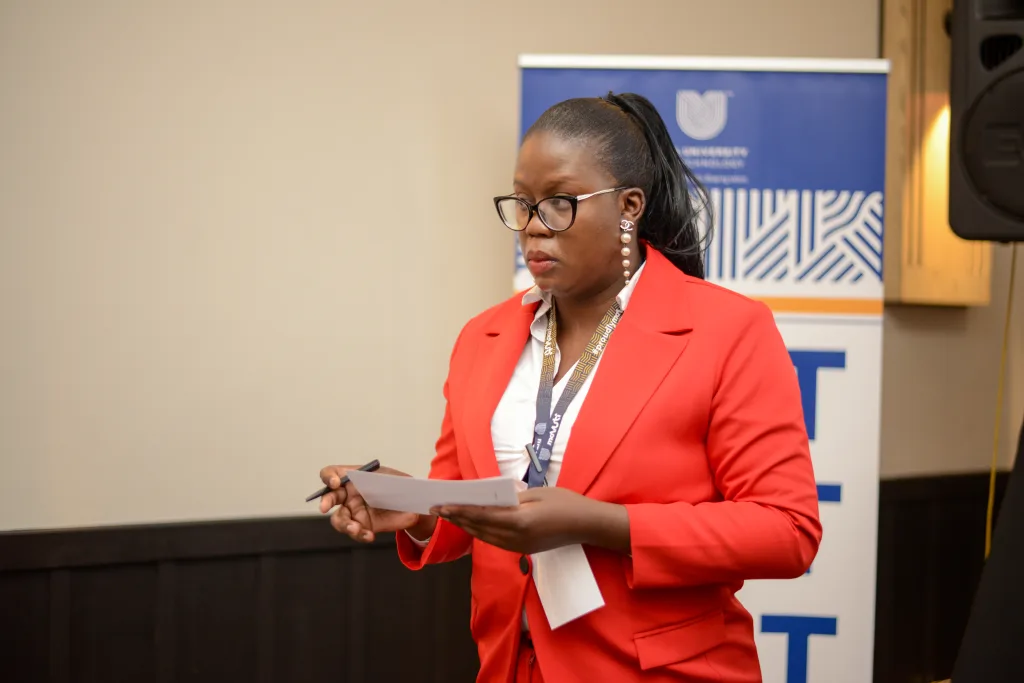
In fields where safety, precision and trust are non-negotiable, the people who set standards carry a quiet but profound responsibility.
It is within this space that the Vaal University of Technology (VUT) celebrates the appointment of Ms Zwelisha Nkwanyana, Non-Destructive Testing (NDT) Programme Coordinator, to serve in a secretariat role on the South African Qualifications and Certification Committee for Non-Destructive Testing (SAQCC NDT).
Non-Destructive Testing, commonly known as NDT, is a specialised discipline used to evaluate the integrity of materials and structures without causing damage. From power generation to manufacturing and aviation, it plays a critical role in ensuring that systems are safe, reliable and compliant.
Reflecting on her appointment, Ms Nkwanyana emphasised the significance of contributing to such a critical field.
“Non-Destructive Testing plays a vital role in ensuring safety and quality across industries. Being part of structures that guide standards and qualifications is an opportunity to contribute meaningfully to the future of the profession in South Africa,” she said.
The SAQCC NDT, mandated by the Department of Employment and Labour, oversees the registration of professionals and guides the development of the NDT field nationally. Ms Nkwanyana’s appointment is a recognition of her expertise, her industry contribution and her commitment to advancing standards within this specialised space.
Her nomination was put forward by the Higher Education NDT Consortium, which includes institutions such as the Cape Peninsula University of Technology, University of Pretoria, University of Johannesburg, Tshwane University of Technology and VUT. Together, these universities play a central role in developing the next generation of professionals equipped to operate in highly technical and safety critical environments.
The SAQCC NDT Board brings together representatives from key sectors, including power generation, the fuels industry, certification bodies and professional organisations such as the South African Institute for Non-Destructive Testing, the Southern African Institute of Welding, the South African Institute of Foundrymen, higher education institutions and the freight industry. Within this structure, Ms Nkwanyana will contribute to strengthening certification standards, promoting ethical practice and supporting the strategic direction of the profession.
Her appointment comes at a pivotal moment for the NDT section within VUT’s Applied Physical Sciences Department, led by Professor Solly Lebelo, which is actively repositioning its programme to deepen industry alignment and ensure that graduates are equipped with relevant, market ready skills.
Through her role at national level, Ms Nkwanyana will also contribute to shaping NDT qualifications within higher education, ensuring alignment with National Qualifications Framework requirements and evolving industry needs.
In further recognition of her expertise, she has been nominated by the Manufacturing, Engineering and Related Services Sector Education and Training Authority as a Subject Matter Expert in the development of the Occupational Qualification: Non-Destructive Testing Technician at NQF Level 5. This process, guided by the Quality Council for Trades and Occupations, aims to strengthen the pipeline of specialised technical skills required by industry.
“This will support South Africa’s broader goals of skills development, industrial growth and inclusive economic participation,” she added.
Her achievement is more than a personal milestone. It reflects the growing role of VUT in shaping industry standards and contributing meaningfully to national skills development within specialised and critical fields.
Through leadership such as this, the University continues to position itself not only as a centre of learning, but as a contributor to the systems, standards and practices that sustain industry and society.