
“VUT Alumni Relations and Creative Arts connected students, academics and industry professionals to explore creativity, networking and sustainable careers.”
04 September | Story by: Tshepiso Kaibe | Picture: Siphephelo Dlamini
5 minutes read time.
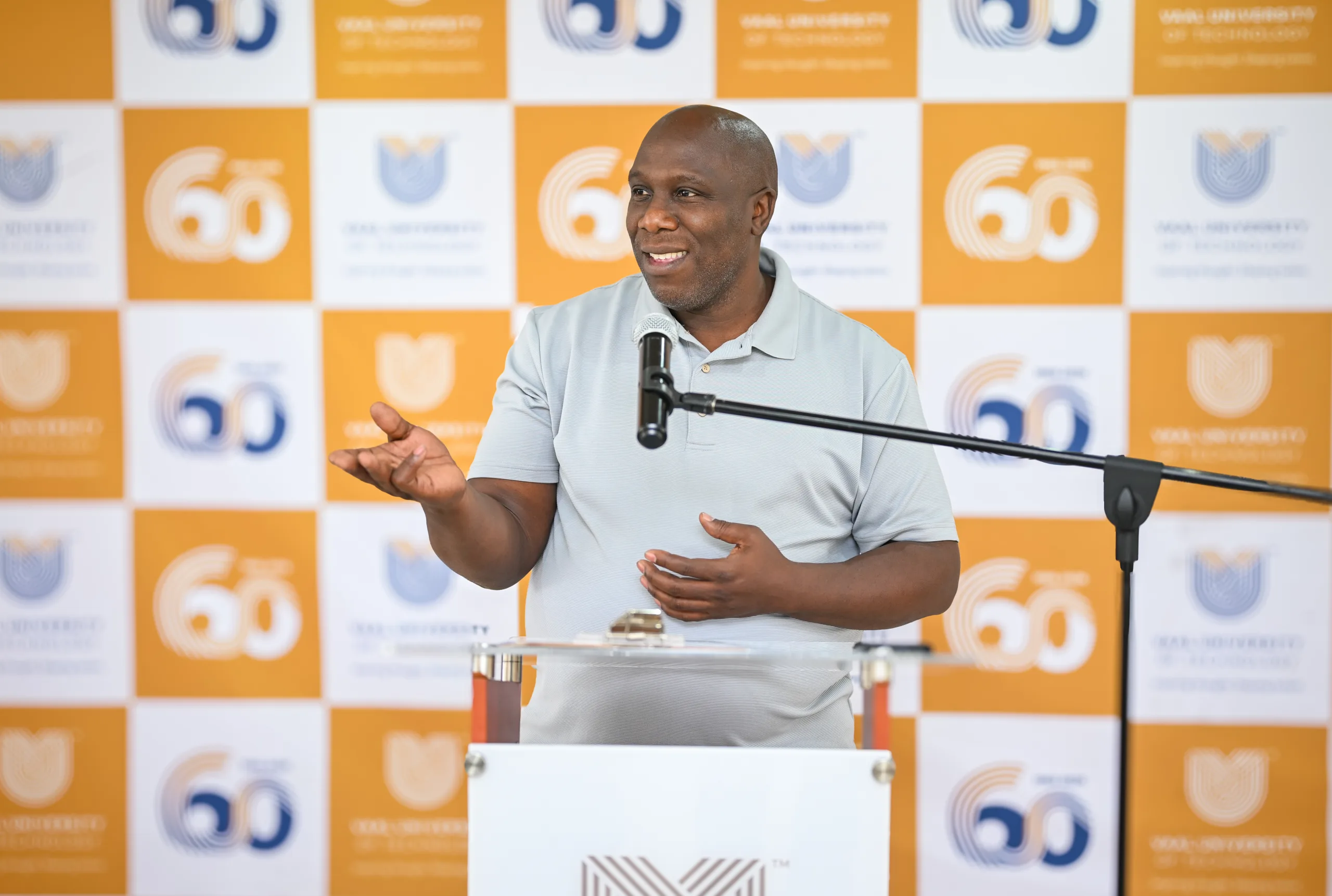
Talent may open doors, but building a sustainable career requires far more than creative ability alone. It demands confidence, industry knowledge, professional networks and a willingness to keep learning.
These themes took centre stage during a networking lunch hosted by the Vaal University of Technology (VUT) Alumni Relations Department in partnership with the VUT Creative Arts Student Chapter on 25 August 2026. The event brought students together with academics, alumni and professionals to explore how creative talent can translate into meaningful career opportunities beyond graduation.
Serving as programme director, Ms Mamojalefa Letlapa reflected on the growth of the Creative Arts Student Chapter since its establishment in 2018. She described the chapter as a supportive community where students from diverse creative backgrounds can grow, collaborate and inspire one another.
“The purpose of the group is to just be a family and assist each other,” she said.
Encouraging students to take full advantage of networking opportunities, Letlapa urged them to learn from experienced professionals and begin thinking strategically about how their talents can evolve into sustainable careers.
The importance of building a future from creativity was echoed by VUT Head of Alumni Relations, Mr Peter Masombuka, who reminded students that personal talents can complement academic qualifications and create additional career pathways.
“There’s a production side where you do your scripts, whether it’s drama or poetry. And there’s a business side,” he said.
His message highlighted the importance of understanding the commercial realities of creative work, including contracts, intellectual property, entrepreneurship and professional development.
The conversation moved beyond pursuing artistic passions and challenged students to consider what is required to sustain them in a competitive and rapidly evolving industry.
Dr Mashaole Makwela, Senior Lecturer and Programme Coordinator in the Department of Visual Arts and Design, emphasised the power of collaboration and networking in unlocking
opportunities. Drawing on previous creative projects at VUT, including collaborative filmmaking initiatives, he demonstrated how diverse talents can come together to transform ideas into impactful outcomes.
“You also need to make sure that you socialise, you have a network with relevant stakeholders, so that it can actually become bigger,” he said.
Dr Makwela encouraged students to explore animation, comics, film and digital platforms as powerful tools for storytelling and innovation. He also challenged them to contribute actively to shaping African narratives through their creative work.
“It is your responsibility,” he said, referring to the opportunity to tell authentic and diverse stories about the African continent.
The discussion also highlighted the growing intersection between creativity and other disciplines. Dr Kgomotso Mtshatsheni, Senior Lecturer in the Department of Biotechnology and Chemistry, challenged traditional perceptions that separate artistic and scientific thinking.
Speaking about the shift from STEM to STEAM education, she stressed the value that creative thinkers bring to science, technology and innovation.
“We want your creativity,” she told students.
Whether through poetry, theatre, design or other artistic forms, Dr Mtshatsheni encouraged participants to consider how creativity can help communicate scientific concepts, inspire innovation and contribute to solving complex challenges.
Her message underscored the importance of interdisciplinary learning and the development of graduates who can think critically, creatively and collaboratively.
Bringing an industry perspective to the discussion, Ms Kimberly Kempkes, Executive Administrator in the Office of the Deputy Vice-Chancellor for Teaching, Learning and Quality, shared insights from her career as an award-winning theatre performer, scriptwriter, director and choreographer.
Drawing on her personal experiences, she spoke candidly about the realities of the creative sector and the resilience required to navigate its challenges.
“It’s knowing your worth. It’s knowing that you’re good. And believing in yourself,” she said.
While encouraging confidence, she emphasised that professional success also requires continuous preparation, persistence and the ability to learn from setbacks.
“You’ve really got to push yourself,” she advised. “You’ve got to make sure that when you walk into that room, they feel your presence.”
Adding a creative dimension to the event, poets Umnikazi we Pen and Setshwana captivated attendees with performances that transformed many of the afternoon’s themes into artistic
expression. Their contributions demonstrated how creativity can inspire dialogue, reflection and connection.
Closing the session, VUT Alumni Officer Mr Comfort Madalane reflected on the transformative power of the arts and the importance of giving creative voices a platform.
“A question becomes theatre. A memory becomes music. A struggle becomes art,” he said.
He encouraged students to apply the knowledge gained throughout the session, pursue opportunities with determination and remain connected to their alma mater as they progress in their careers.
“Go out there, use the wisdom that has been shared with you today, get the knowledge, get the experience, and never forget to come back,” he urged.
The networking lunch marked the third collaboration between the VUT Creative Arts Student Chapter and the Alumni Relations Department. More importantly, it reinforced VUT’s commitment to preparing students not only for graduation, but for careers in which creativity, innovation and professional networks can unlock lasting opportunities.
For the University’s emerging artists, performers, writers and storytellers, the message was clear: success requires more than talent. It requires purpose, preparation and the courage to build connections that can carry their creativity far beyond the campus gates.