
“VUT Chemical Engineering students visited Lethabo Power Station, gaining practical industry exposure while encouraging more young women to pursue engineering careers.”
07 October 2026 | Story by: Thomas Rasehloka| Picture: Peter Masela
3 minutes read time.
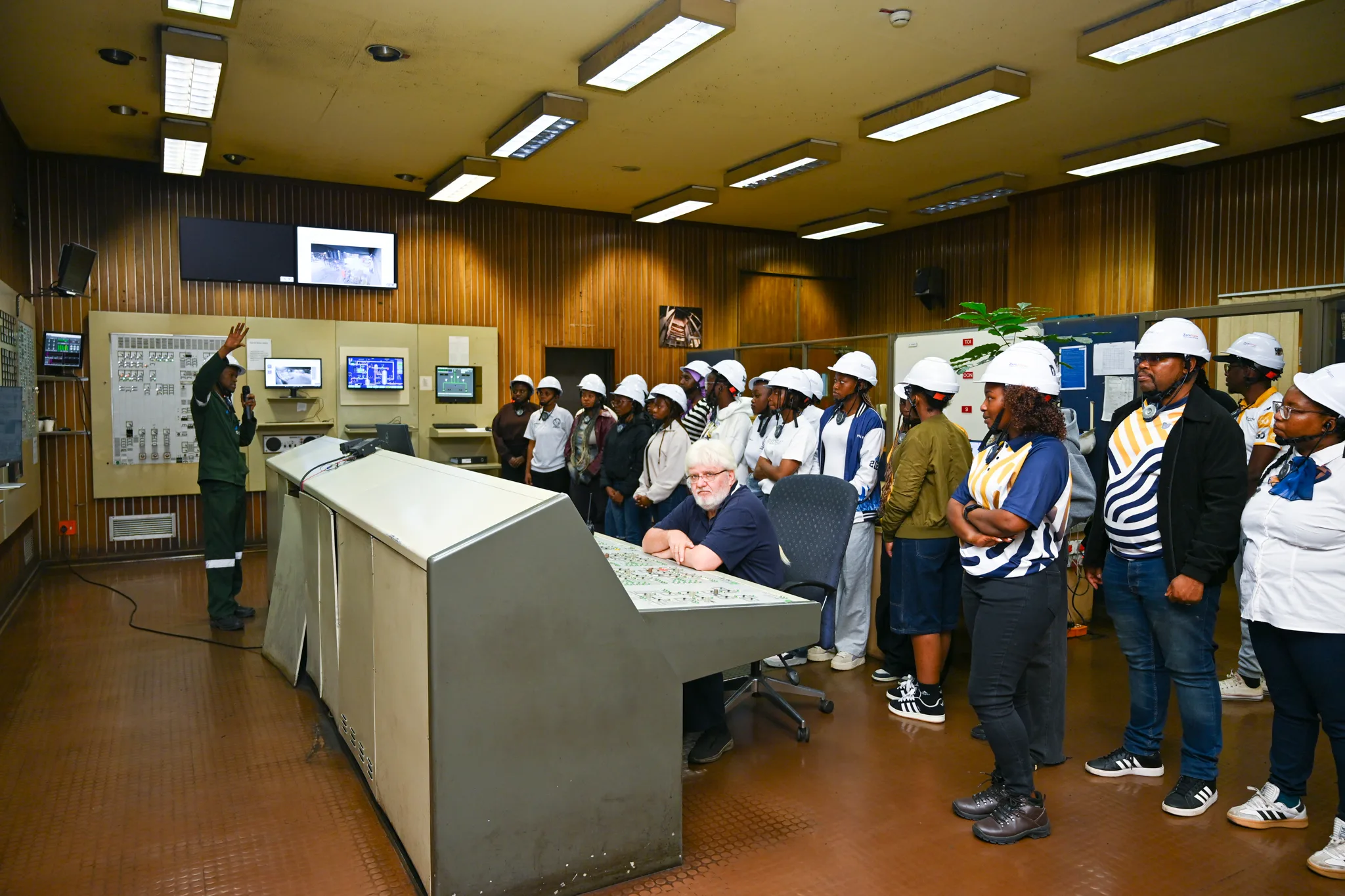
For a group of Semester 4 Chemical Engineering students from the Faculty of Engineering and Technology (FET) at the Vaal University of Technology (VUT), educational visits to Eskom’s Lethabo Power Station on 17 and 21 September 2026 provided more than technical insight. The experience offered a valuable opportunity to connect classroom learning with industry practice while inspiring more young women to pursue careers in engineering.
The visits exposed students to industrial-scale equipment, operational processes and professional engineering environments, enabling them to see firsthand how theoretical concepts taught in lectures and laboratories are applied in practice.
Dr Kentse Motsetse, Acting Head of the Department of Chemical and Metallurgical Engineering (CME), said industry exposure plays a critical role in preparing students for the workplace.
She explained that students are taught to design and size engineering equipment and are typically exposed to bench and pilot-scale systems in laboratories. Industry visits provide an opportunity to observe these concepts applied on a much larger production scale.
“We are an institution that produces industry-ready students,” said Dr Motsetse.
She added that such experiences help students better understand industrial operations while strengthening employers’ confidence in the quality and preparedness of VUT graduates.
Dr Motsetse also highlighted the importance of encouraging greater participation by women in engineering. She noted that VUT and FET continue to support female students through initiatives such as the annual STEM project, which promotes women’s participation in science, technology, engineering and mathematics fields.
She further emphasised the importance of creating safe and supportive learning environments for female students and ensuring that societal challenges do not discourage young women from pursuing engineering careers.
According to Dr Letsabisa Lerotholi, Lecturer in the Department of Chemical and Metallurgical Engineering, the visit was designed to help students understand how engineering knowledge transitions from theory to practice.
“When you see yourself as a working individual and imagine yourself in the workspace as an engineer, you will put more work and focus into your academic work,” said Dr Lerotholi.
She noted that exposure to practising engineers can help students visualise their own future careers, particularly young women who may not always see themselves represented in engineering environments.
For Ms Adivhaho Nekhubvi, a Chemical Engineering student, the visit was an eye-opening experience that deepened her understanding of engineering and strengthened her commitment to the profession.
She said she previously associated Eskom primarily with electricity generation and had not fully appreciated the extent to which different engineering disciplines work together in large-scale operations.
During the visit, she observed the practical application of concepts such as thermodynamics and gained a better understanding of water treatment processes, including purification and demineralisation systems.
The experience also transformed her perspective on her studies.
“It made me love the field that I am in,” she said.
Beyond its academic value, the visit had a personal impact. Nekhubvi said she grew up hearing perceptions that engineering was a field for men, but seeing female engineers in industry and within the University challenged those stereotypes and gave her renewed confidence.
She encouraged young women considering engineering careers to pursue their ambitions without hesitation, emphasising that women are capable of succeeding and thriving in the profession.
The Lethabo Power Station visits provided students with an opportunity to engage directly with industry, interact with practising professionals and gain a clearer understanding of the career opportunities available to them.
Through initiatives such as these, VUT’s Faculty of Engineering and Technology continues to strengthen the link between academic learning and industry practice while developing industry-ready graduates and encouraging more young women to build successful careers in engineering.