
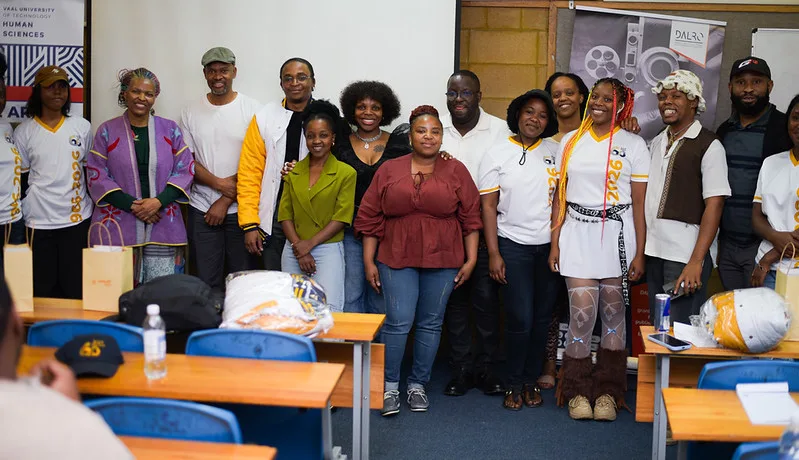
“VUT fine art students explored copyright, intellectual property and creative business opportunities at an awareness event on 20 October 2026.”
05 November 2026 | Story by: Ntebogeleng Digasu | Picture: Sifiso Nomzaza
3 minutes read time.
For emerging artists, creating a distinctive piece of work is only part of the journey. Understanding who owns it, how it may be used and how it can generate income is equally important.
These questions shaped an intellectual property awareness event for fine art students at the Vaal University of Technology (VUT), held at K Block on 20 October 2026. Representatives from the intellectual property and creative sectors shared practical advice on protecting original work, understanding contracts and building sustainable creative businesses.
Mr Kadi Petje, from the Companies and Intellectual Property Commission (CIPC), introduced students to copyright, trademarks, patents and designs, explaining their different purposes and relevance to creative work.
He encouraged students to retain original files and drafts, document their creative processes and read agreements carefully before signing. He also distinguished between having intellectual property rights and taking steps to enforce them.
“Copyright protection is automatic when you create an original work, but protecting and enforcing your intellectual property are two different things. You must keep evidence of your work, understand your agreements and take responsibility for protecting your creative assets,” Mr Petje explained.
Ms Teedow Love Noluthando, an international disc jockey (DJ), focused on the business decisions artists face when sharing their work, collaborating with others and developing a brand.
She cautioned students against assuming that crediting an artist automatically gives them permission to use that artist’s work. She also encouraged them to research prospective brand names, check contract terms and document their contributions to collaborative projects.
“Every project you work on is an opportunity to protect yourself. Your portfolio is more than a collection of work; it is a collection of assets that you own, can license and can earn from for years,” Ms Noluthando said.
Her advice included backing up creative work, recording project start dates and keeping written agreements that clarify ownership and permitted uses. These habits can help artists establish a record of their contributions and avoid uncertainty when working with clients or partners.
Ms Thando Philison Kgotwane, representing the Composers, Authors and Publishers Association (CAPASSO), contributed a music industry perspective to the discussion on copyright and licensing. CAPASSO licenses mechanical rights and collects and distributes royalties to its members, including composers, authors and music publishers.
“As creatives, it is important to understand our rights and know how our work can be protected. Copyright allows creators to benefit from their work, and understanding licensing helps ensure that their creativity is respected and valued within the industry,” Ms Kgotwane said.
For students preparing to enter the creative industries, the discussions offered insight into responsibilities that extend beyond producing artwork.
Mr Mfihlo Makhubela, a third-year student, welcomed the opportunity to learn more about the working world.
“I think it is very helpful for me because it helps us to understand what is happening out there in the world, since we are graduating next year,” Mr Makhubela said.
Second-year fine art student Ms Ndiyabonga Nonkelela also valued the presentations and the issues raised by the speakers.
“The experience that I got today was very intriguing, and the points that the guests were making were very important,” Ms Nonkelela said.
The event encouraged students to view their portfolios as both creative expressions and potential sources of income. Keeping records, asking questions before signing agreements and understanding ownership can help them make informed decisions as they begin building their careers.