
“VUT’s fourth Internal Stakeholder Roundtable highlights institutional progress, unresolved challenges and renewed commitments to accountability and delivery.”
12 November 2026 | Story by: Tshepiso Kaibe | Picture: Keitumetse Mokgope
8 minutes read time.
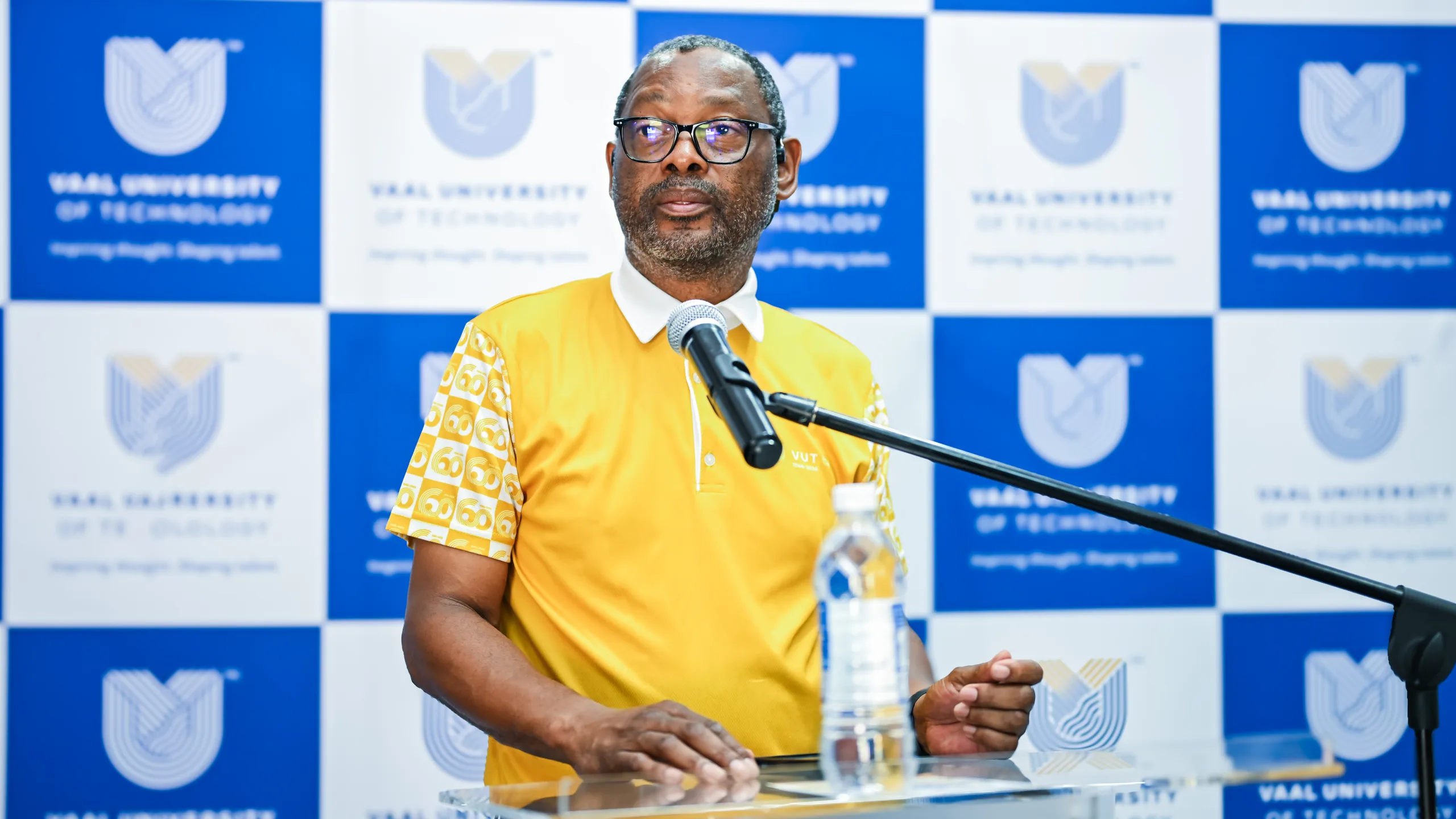
What happens after stakeholders raise their concerns, management makes commitments and the discussions come to an end? For the Vaal University of Technology (VUT), the answer must increasingly be reflected in measurable progress, clear accountability and tangible improvements in the experiences of staff and students.
This was the central message emerging from the University’s fourth Internal Stakeholder Roundtable, held on 5 November 2026 at the VUT Conference Centre under the theme, “From Dialogue to Delivery: Reflecting on Progress, Strengthening Accountability and Building Institutional Trust.”
The engagement brought together University management and internal stakeholders to assess progress on commitments made during previous roundtables, confront unresolved institutional challenges and identify priorities requiring further intervention.
Opening the engagement, VUT Vice-Chancellor and Principal, Professor Khehla Ndlovu, acknowledged stakeholders’ continued participation while emphasising that institutional progress cannot be measured solely through reports, revised policies or commitments. Instead, meaningful change must be evident in the everyday experiences of the University community.
“People deserve to know what happened to their proposals, what decisions were taken and what remains to be done,” he emphasised.
His remarks set the tone for an engagement that sought to move beyond identifying institutional challenges towards examining what had been achieved, what remained outstanding and who should be held responsible for implementation.
Professor Ndlovu challenged management to ensure that agreed interventions are supported by clearly defined responsibilities, realistic timelines and evidence of progress, particularly as the University determines its priorities for the next six months.
Unlike previous engagements, which focused largely on commission reports, the fourth roundtable adopted a more reflective and accountability-driven approach.
As outlined by the Programme Director, Ms Nkosazana Tengimfene, portfolio representatives were expected to interrogate the consolidated report, assess progress against previous commitments and identify matters requiring immediate institutional attention.
Measurable progress, but challenges remain
Among the notable improvements reported was progress in employee performance management, with the proportion of staff covered by performance agreements increasing from 57% to 96.5%, exceeding the institutional target of 90%.
Progress was also reported in filling critical vacancies and strengthening recruitment processes. Meanwhile, interventions aimed at addressing procurement delays included additional managerial capacity and plans to introduce greater automation.
Chief Financial Officer, Ms Nthanyiseni Dhumazi, explained that the proposed procurement automation would improve transparency and enable departments to monitor outstanding requests more effectively.
She said the intention was to introduce “the ability to track the requisitions and see how far the requisitions are”, allowing delays to be identified and addressed more efficiently.
While these developments reflected progress in strengthening institutional systems, the discussions also revealed areas where commitments have yet to translate into meaningful improvements.
Teaching and learning infrastructure, student accommodation and campus safety remained among the concerns raised, highlighting the need for coordinated planning, sustained investment and greater accountability across responsible portfolios.
Although improvements to academic facilities, including new laboratories, were acknowledged, stakeholders emphasised the importance of advancing curriculum transformation and ensuring that students and lecturers have access to the resources necessary for effective teaching and learning.
Deputy Vice-Chancellor for Teaching and Learning, Dr Grace Kanakana-Katumba, cautioned that the consolidated report needed to place greater emphasis on the quality of the academic experience, rather than concentrating predominantly on operational challenges.
“The quality of the teaching and learning aspects … need to be highlighted a little bit more,” she said, calling for a more integrated approach to addressing challenges affecting the academic project.
Her contribution highlighted the need to evaluate institutional progress not only through infrastructure improvements and administrative reforms, but also through their impact on the quality of teaching, learning and student success.
The importance of connecting infrastructure planning with the lived experiences of the University community was echoed by Deputy Vice-Chancellor for Resources and Operations, Mr S’celo Mahlalela.
Reflecting on student accommodation, energy planning and campus safety, he encouraged stakeholders and management to remain open to difficult conversations.
“We should appreciate being challenged,” he said, emphasising that constructive criticism provides an opportunity for leadership to reassess existing approaches and develop more effective institutional responses.
Employee development, institutional culture and financial sustainability also featured prominently in the discussions.
Despite progress in strengthening internal processes, concerns relating to career progression, staff morale and the implementation of institutional policies remain areas requiring sustained attention.
The University’s Council-approved financial sustainability plan, ongoing policy reviews and efforts to improve procurement efficiency were highlighted as part of broader interventions aimed at improving institutional performance.
Executive Director for Governance and Legal Services, Advocate S’mangaliso Vilakazi, clarified the responsibilities associated with institutional policy development and review, explaining that departments are responsible for initiating policies while his office provides the necessary legal and governance support.
“We are providing support,” he said, outlining ongoing efforts to review outdated policies and improve the communication of governance decisions.
Reflecting on the human resources portfolio, Executive Director for Human Resources, Ms Khanyisa Hanisi, acknowledged that “a lot still needs to be done to improve on our employee value proposition”.
Her remarks reinforced the importance of ensuring that institutional reforms translate into improvements in employees’ professional development, working conditions and overall experience of the University.
Strengthening communication and rebuilding trust
Another significant focus of the roundtable was the relationship between institutional communication, accountability and stakeholder confidence.
Discussions highlighted the need to address fragmented communication platforms, improve the coordination of institutional information and strengthen feedback mechanisms through which staff and students can track progress on matters previously raised.
Attention was also drawn to the importance of communicating the University’s academic and research achievements more effectively, strengthening its institutional reputation and ensuring that stakeholders remain informed about developments across different portfolios.
The Marketing and Communications Department, represented by Mr Sibusiso Nkosi, Head of Corporate Division, emphasised that effective institutional communication requires greater collaboration and accountability from departments responsible for generating and managing information.
Departments must actually supply the information, they own the information,” he explained, highlighting the importance of timely and accurate information-sharing across the University.
He also identified the need for better coordination of digital communication channels and stronger efforts to communicate VUT’s research achievements, particularly as the institution seeks to enhance its academic reputation and public visibility.
The discussions underscored that communication must extend beyond issuing announcements and publishing reports. Equally important is ensuring that stakeholders receive regular feedback on commitments made during previous engagements, including explanations where implementation has been delayed.
This responsibility cannot rest with communication structures alone. Departments must take ownership of their commitments, provide evidence of progress and ensure that information reaches the University community.
The engagement further highlighted the interconnected nature of institutional challenges.
Issues relating to infrastructure, procurement, student support, human resources and communication frequently cut across several portfolios, making coordinated interventions essential.
Consequently, greater emphasis was placed on shared accountability, with responsible departments expected to implement agreed actions, monitor progress and report on outstanding commitments.
These priorities align with the ambitions of VUT Strategy 2033+, particularly its commitment to institutional excellence, good governance and creating an enabling environment for teaching, learning, research and innovation.
From commitments to meaningful change
As VUT celebrates its 60th anniversary, the roundtable provided an opportunity to reflect not only on six decades of institutional development, but also on the changes required to build a stronger, more accountable and sustainable University.
In his closing reflections, Professor Ndlovu reaffirmed the University’s commitment to sustained stakeholder engagement, announcing that the roundtables would be convened at least twice annually from 2027.
He also reminded participants that institutional transformation is a collective responsibility, drawing on the analogy of a jigsaw puzzle to illustrate how every member of the University contributes to its overall success.
“I may be a Vice-Chancellor, but I’m not more important than any of you,” he remarked.
His message reinforced the importance of mutual respect, collective ownership and shared responsibility in advancing the University’s institutional priorities.
While the fourth roundtable acknowledged measurable improvements in several areas, it also exposed the distance that still exists between some institutional commitments and their implementation.
The challenge now is to ensure that the issues raised do not simply become part of another report, but are translated into clearly assigned actions, realistic deadlines and measurable outcomes.
Ultimately, the success of the roundtable will not be determined by the quality of the discussions or the number of commitments made, but by what changes afterwards. For VUT, rebuilding institutional trust will depend on whether staff and students can see, experience and benefit from the progress being reported.