
“Dr Itumeleng Kohitlhetse earns a PhD in Chemical Engineering at the Vaal University of Technology (VUT), advancing CO₂ sequestration research and inspiring future engineers.”
17 April 2026 | Story by: Kwanele Moloi | Picture: Sifiso Nomzaza
3 minutes read time.
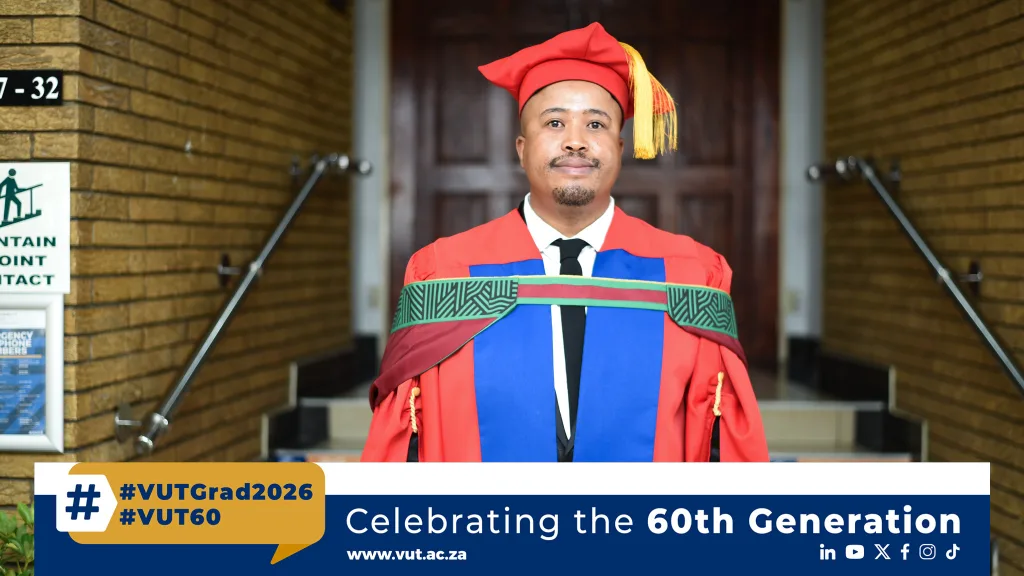
On a proud graduation day at the Vaal University of Technology (VUT), a quiet but powerful transformation unfolded. Dr Itumeleng Christopher Kohitlhetse stepped forward not only as a PhD graduate in Chemical Engineering, but as a lecturer who had walked the very path he now teaches.
His journey began far from lecture halls and laboratories, in Taung in the North West Province. It is here that the foundation of resilience was laid. Years later, that same resilience would carry him through a demanding academic journey that spanned more than a decade.
Balancing the responsibilities of lecturing with the intensity of doctoral research is no small feat. Yet, Dr Kohitlhetse embraced both worlds with discipline and determination. His story is not one of sudden breakthrough, but of steady, deliberate progress shaped by long nights, intellectual strain, and an unwavering belief in what education can unlock.
His academic path reflects a full-circle journey within the University. He began with a National Diploma in Metallurgical Engineering, stepped into industry to gain practical experience, and returned to deepen his academic pursuit through a BTech qualification. It was during this time that his curiosity sharpened into a clear research focus.
That focus culminated in his doctoral study titled Beneficiation of Modified Blast Furnace Ironmaking Slag for CO₂ Sequestration. At its heart, the research explores how industrial by-products, often discarded as waste, can be transformed into valuable resources. It is work that sits at the intersection of environmental responsibility and industrial innovation, offering pathways to reduce carbon emissions while enhancing material value.
Reflecting on the journey, Dr Kohitlhetse speaks candidly about the toll it took. He described the mental strain of pursuing a PhD as “permanent head damage”, a phrase that captures both the intensity of the process and the depth of personal sacrifice required. Yet, within that strain lies growth.
“I started my studies here at VUT from a National Diploma in Metallurgical Engineering… that’s when I developed a passion for research,” he reflects, acknowledging the institution that shaped his trajectory.
His achievement resonates far beyond personal success. For many students, particularly those from rural or under-resourced communities, his story stands as proof that origin does not define destiny. It affirms that local talent, when nurtured and disciplined, can rise to meet global standards of excellence.
In many ways, his journey strengthens the broader mission of the University, shifting the narrative from producing graduates who seek employment to cultivating thinkers who create opportunity. His work contributes to the growing body of research that positions the University as a space of innovation, relevance, and impact.
Looking ahead, Dr Kohitlhetse is not stepping away from this journey. Instead, he is turning back to guide others. As a lecturer, he carries both knowledge and lived experience into the classroom, shaping the next generation of engineers with a deeper sense of purpose.
He challenges his students to become more than graduates. He urges them to evolve into “techno-entrepreneurial graduates”, individuals who can translate knowledge into solutions, and solutions into economic possibility.
For him, the true value of a PhD lies not only in academic recognition, but in its power to create, to employ, and to inspire. In that vision, his journey continues, not as a destination reached, but as a path extended for others to follow.