
“VUT has strengthened its internationalisation strategy through a strategic partnership with Saskatchewan Polytechnic in Canada, creating new opportunities for applied research, innovation, student mobility and industry collaboration.”
08 July 2026 | Story by: Staff Reporter | Picture: Supplied
5 minutes read time.
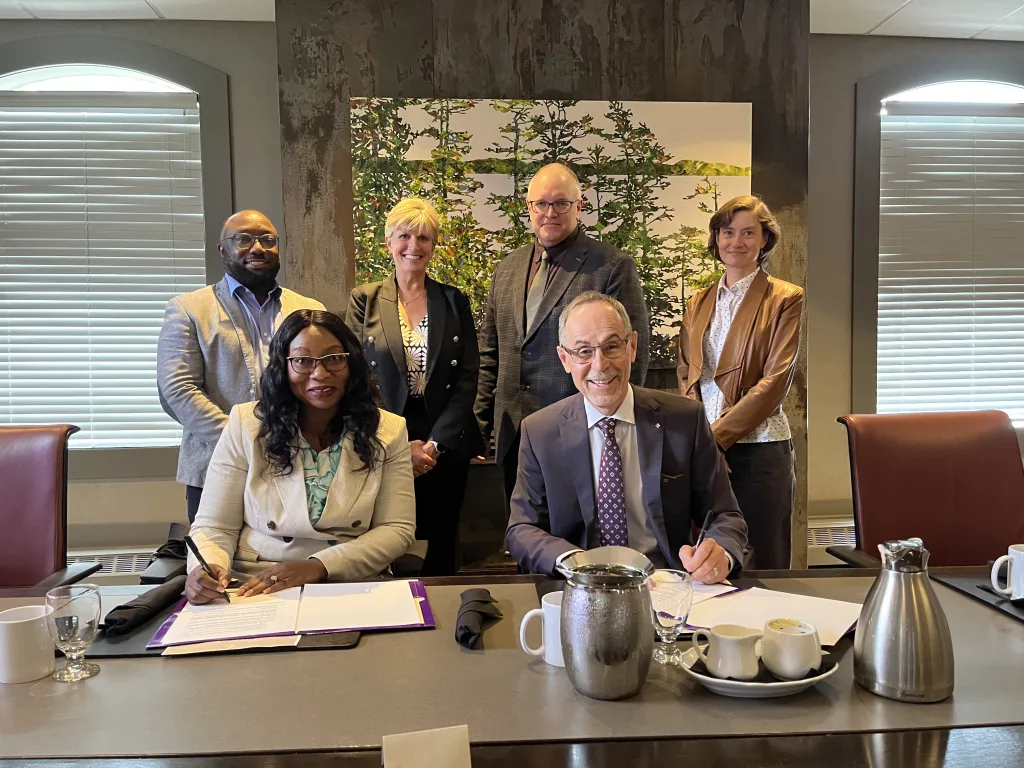
The Vaal University of Technology (VUT) has taken another significant step in advancing its internationalisation agenda through the signing of a Memorandum of Understanding (MoU) with Saskatchewan Polytechnic in Canada. The partnership establishes a framework for collaboration in teaching and learning, applied research, innovation, curriculum development, student and staff mobility, and industry engagement.
The agreement follows a benchmarking visit to Saskatchewan Polytechnic by VUT’s Deputy Vice-Chancellor: Teaching and Learning, Dr Mukondeleli Grace Kanakana-Katumba, which sought to strengthen institutional collaboration and identify best practices that support VUT’s commitment to academic excellence, innovation and graduate success.
“Internationalisation is not simply about building relationships across borders. It is about creating meaningful opportunities that enrich teaching and learning, strengthen research and prepare our students to succeed in an increasingly interconnected world,” said Dr Mukondeleli Grace Kanakana-Katumba.
“Our partnership with Saskatchewan Polytechnic enables us to learn from a globally respected institution while creating new opportunities that will benefit our students, academics and researchers for years to come. Through this collaboration, we are laying the foundation for innovation, knowledge exchange and sustainable partnerships that will strengthen VUT’s global impact.”
Recognised internationally for its strong industry partnerships and applied research model, Saskatchewan Polytechnic is renowned for developing practical solutions that respond to economic and societal challenges. Its collaborative approach aligns closely with VUT’s vision of producing graduates equipped to thrive in an increasingly technology-driven and globally connected environment.
During the visit, the VUT delegation explored several of Saskatchewan Polytechnic’s internationally recognised Centres of Excellence to identify innovative practices that could enhance VUT’s teaching, research and engagement with industry.
One of the highlights was the Sustainability-Led Integrated Centres of Excellence (SLICE), where researchers showcased technologies that transform waste into high-value products while advancing renewable energy solutions. The centre’s work complements VUT’s growing focus on sustainability, the circular economy and community-centred innovation.
The delegation also visited the Digital Integration Centre of Excellence (DICE), where multidisciplinary teams work alongside industry to develop advanced digital technologies that
improve productivity and address complex industrial challenges. The collaborative model demonstrated how stronger partnerships between higher education institutions and industry can accelerate innovation while producing practical solutions for society.
Another key stop was the Advanced Manufacturing Centre, where industry and academia collaborate to design, prototype, test and implement advanced manufacturing technologies. The visit highlighted the importance of applied research in strengthening industrial competitiveness while ensuring graduates develop the practical skills required by modern workplaces.
The benchmarking visit culminated in the signing of the MoU, which was attended virtually by VUT Vice-Chancellor and Principal, Prof Stephen Ndlovu, and Executive Dean of the Faculty of Engineering and Technology, Prof Khaled Abou-El-Hossein. Together with Dr Kanakana-Katumba, they introduced VUT to Saskatchewan Polytechnic’s leadership and reaffirmed both institutions’ shared commitment to developing a long-term strategic partnership.
The Saskatchewan Polytechnic delegation was led by Dr Larry Rosia, President and Chief Executive Officer, together with members of the Executive Leadership Team, including Dr Mary Vaughan, Vice-President: Academic; Dr Ian McWilliams, Vice-President: Research and Innovation; Dr Lord Ugwu of the Nutrien School of Mining, Manufacturing and Engineering Technologies, who also delivered the keynote address at the launch of the VUT Green Hydrogen Centre of Excellence; Dr Robin Smith, Director of the Sustainability-Led Integrated Centres of Excellence (SLICE); and Ms Annie Fu, Director of International Education.
Discussions focused on expanding collaboration in applied research, renewable energy, renewable materials, advanced manufacturing, curriculum innovation, student and staff exchange, and joint research initiatives that respond to the evolving needs of industry and society.
Among the key opportunities identified was participation in Collaborative Online International Learning (COIL) projects. Through technology-enabled collaboration, COIL enables students from different countries to work together on shared academic projects without the financial barriers associated with traditional mobility programmes. The initiative presents valuable opportunities for VUT students, particularly in Engineering, Applied Sciences and Computing, to gain international exposure while studying from their home campus.
Building on the momentum created by the Canadian visit, Saskatchewan Polytechnic’s Associate Vice-President: International, Dr Thevi Pather, visited VUT on 1 July 2026 to begin discussions on implementing the newly signed agreement.
The engagement brought together academic leaders from the Faculty of Engineering and Technology, the Faculty of Applied and Computer Sciences and VUT’s Internationalisation Office. Representing VUT were Prof Peter Osifo, Dr Kentse Motsetse, Prof Bernard Tchomeni, Prof Solly Lebelo, Prof Joe Modise and Mr Vido Kungune, together with other members of the University’s leadership.
The discussions identified several priority areas for collaboration, including Mechanical Engineering, Electrical Engineering, Agricultural Sciences, Renewable Energy, Applied Research, Digital Technologies, Nursing, academic staff development, joint postgraduate supervision, curriculum innovation, collaborative research projects and student mobility.
The partnership directly supports VUT Strategy 2033+, which positions the University as a digitally smart, innovative, entrepreneurial and globally connected institution. Through strategic international partnerships, VUT continues to strengthen the quality of its academic programmes, expand research opportunities, enhance staff development and provide students with meaningful international learning experiences.
As implementation of the agreement begins, both institutions will establish collaborative initiatives that translate the partnership into measurable outcomes for students, academics, researchers and industry. The collaboration reflects VUT’s continued commitment to building globally relevant partnerships that advance knowledge, foster innovation and contribute to sustainable socio-economic development in South Africa and beyond.