
“Vaal University of Technology (VUT) hosted a dynamic two-day World Intellectual Property Day celebration, bringing together sport, innovation, and youth voices to inspire creativity and protect ideas.”
22 April 2026 | Story by: Ntebogeleng Digasu | Picture: Sifiso Nomzaza
5 minutes read time.
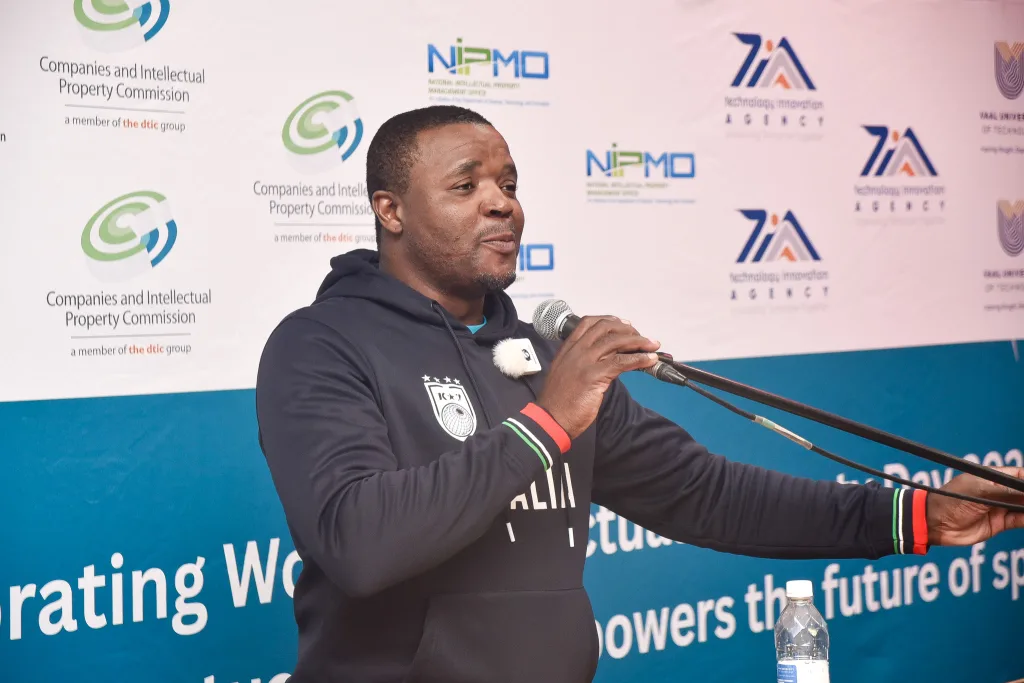
“Protect your ideas now, not later.” This message, simple yet urgent, echoed throughout a vibrant two-day World Intellectual Property Day (WIPD) celebration hosted by the Vaal University of Technology (VUT) on 23 and 24 April 2026. More than a commemorative event, the programme unfolded as a living conversation between generations, disciplines, and aspirations, drawing together learners, students, educators, innovators, government representatives, and sporting figures under the unifying theme of sport and innovation.
The celebration opened on 23 April at Thabong Mall, where the University took knowledge beyond institutional walls and into the public square. Gazebos lined the precinct, creating an accessible, interactive environment where community members could engage directly with experts on intellectual property. The atmosphere was both educational and energetic, as curiosity met opportunity in a space designed to demystify the value of ideas.
Adding a dynamic rhythm to the day was South African freestyle football champion, Mr Lloyd Monso of the Sipho Six Foundation, whose performance and message resonated strongly with younger audiences. He spoke of the growing global recognition of freestyle football and the need to nurture such talent locally. “Many countries overseas already use these skills to gain an advantage in the game,” he said, underscoring the importance of investing in emerging forms of expression and competition.
Former professional footballer and sports influencer, Mr Abia Nale, offered a more reflective perspective, grounding inspiration in the realities faced by many young athletes. He spoke candidly about the gap between talent and opportunity, particularly within township communities. “There is so much talent in our townships, but many youngsters are never exposed to proper teams, coaches, or academies,” he said. He stressed that education remains a vital anchor, enabling young people to navigate not only their careers, but also the complex decisions that shape their futures.
The programme transitioned on 24 April to the VUT Southern Gauteng Science and Technology Park, where the focus shifted towards deeper engagement with learners from across the Vaal region. Here, the conversation matured into one of ownership, responsibility, and possibility. Deputy Vice Chancellor for Research, Innovation, Commercialisation and Internationalisation (RICI), Professor Simphiwe Nelana, set the tone with a message that placed intellectual property at the centre of personal and societal advancement.
“The keyword today is protection,” he said. “Protect your ideas immediately. Do not wait until you finish school or enter university.” His remarks carried both urgency and reassurance, reminding learners that innovation does not begin in laboratories or lecture halls, but often in the quiet spaces of imagination.
Professor Nelana also reflected on the evolving role of technology, cautioning against an uncritical embrace of artificial intelligence. While acknowledging its permanence, he emphasised the enduring role of human judgement. “Artificial intelligence is here to stay, but it does not have ethics,” he noted. “It is human beings who must guide technology responsibly and use it to improve lives.” In this, the message extended beyond innovation to the moral stewardship of progress itself.
From a policy perspective, Senior Education Specialist for Copyrights at the Companies and Intellectual Property Commission (CIPC), Mr Mojalefa Khoza, traced the roots of intellectual property education within the national agenda. He highlighted a 2015 parliamentary directive aimed at embedding such knowledge at primary school level, reinforcing the idea that awareness must begin early if it is to shape future innovators meaningfully.
Institutional leadership further underscored the importance of the initiative. Council Member Ms Kelebogile Dilotsotlhe reflected on the real-world consequences of unprotected ideas, recalling instances where innovation became a source of conflict rather than opportunity. Her remarks served as a reminder that intellectual property is not merely a legal concept, but a safeguard of fairness and integrity.
Equally compelling was the contribution from the National Intellectual Property Management Office (NIPMO), where Deputy Director Ms Lungelwa Kula urged learners to see innovation not as an abstract concept, but as a pathway to tangible opportunity. She highlighted the availability of funding and partnerships, positioning intellectual property as both a protective mechanism and an enabler of growth.
Perhaps the most resonant moment of the day came from former Bafana Bafana captain and current South African Football Association assistant head scout, Mr Aaron Mokoena. Speaking with humility and conviction, he traced his journey from the streets of Boipatong to the global stage. “If I made it to Europe, then you can also reach your dreams,” he said, grounding aspiration in discipline, focus, and resilience.
In closing, Acting Senior Manager at the Technology Transfer Office (TTO), Mr Thabo Kgole, reflected on the collective effort behind the programme. His words carried a quiet confidence in the institution’s trajectory. “We are competent, capable, and moving forward,” he said, acknowledging the collaboration between leadership, partners, staff, and students that made the initiative possible.
The voices of learners and educators added a final layer of meaning to the event. Mr Bokang Mabote from JET NTEU School of Specialisation spoke of a shift in perspective, noting how the programme had opened his mind to the importance of protecting creativity. Ms Khwezilokusa Thompson from Suncrest High School described feeling inspired, particularly by the stories of sports personalities who demonstrated that circumstance need not define destiny. English First Additional Language teacher Ms Kelebogile Moyolo from Lekoa Shandu Secondary School echoed this sentiment, expressing hope that the lessons shared would resonate long after the event concluded.
Guided throughout by comedian and programme director Mr Skholo Mayisa, whose blend of humour and engagement kept audiences attentive, the celebration maintained a balance between insight and accessibility. His presence ensured that the learning experience remained both meaningful and memorable.
As the final conversations drew to a close, what remained was not only knowledge, but a renewed sense of possibility. Learners departed with a clearer understanding that their ideas hold value, that innovation begins with belief, and that even the smallest spark, when protected and nurtured, has the power to shape the future.